As an Amazon Associate, we earn from qualifying purchases. Some links on this site are affiliate links at no extra cost to you. Our recommendations are based on thorough research and editorial judgment.

What Size Speakers Do I Need For My Room?

To determine the right size speakers for your room, we need to evaluate several factors like room dimensions and ceiling height. For instance, with a standard 2.5-meter ceiling, speakers can effectively cover around 44 square meters. Floor-standing speakers work well in larger areas for powerful sound, while bookshelf speakers are great for smaller spaces. We should also take room acoustics into account for best sound quality. Let’s explore more tips to enhance your sound system!
Key Takeaways
- Consider your room size; larger rooms may require floor-standing speakers for optimal sound coverage and deep bass.
- Evaluate speaker height; align tweeters with ear level for enhanced audio clarity and overall experience.
- Assess room acoustics; materials and shape can impact sound quality, affecting the choice of speaker type and size.
- Match speaker power and sensitivity; higher sensitivity ratings can amplify sound effectively in larger spaces without requiring excessive power.
- Adjust speaker placement; maintain distance from walls to avoid bass muddiness, ensuring clear audio delivery throughout the room.
Understanding Room Size and Speaker Coverage
You may be interested


When we’re figuring out the right size speakers for a room, it’s essential to take into account the dimensions and characteristics of that space. Speaker coverage considerably depends on ceiling height; for instance, if we have a 2.5-meter ceiling, each speaker can cover approximately 44 square meters. This means we need to guarantee our speakers are spaced adequately—ideally 1.5 to 2 times the ceiling height—for even sound distribution. In larger or noisier environments, more speakers might be necessary to fill gaps and combat background noise. Additionally, adjusting speaker orientation and positioning can help optimize coverage. By carefully calculating these factors, we can create a connected atmosphere where everyone enjoys excellent sound quality and feels included in the experience. It’s also important to consider high wattage options for larger congregations to ensure adequate sound delivery.
Choosing the Right Speaker Type for Your Needs
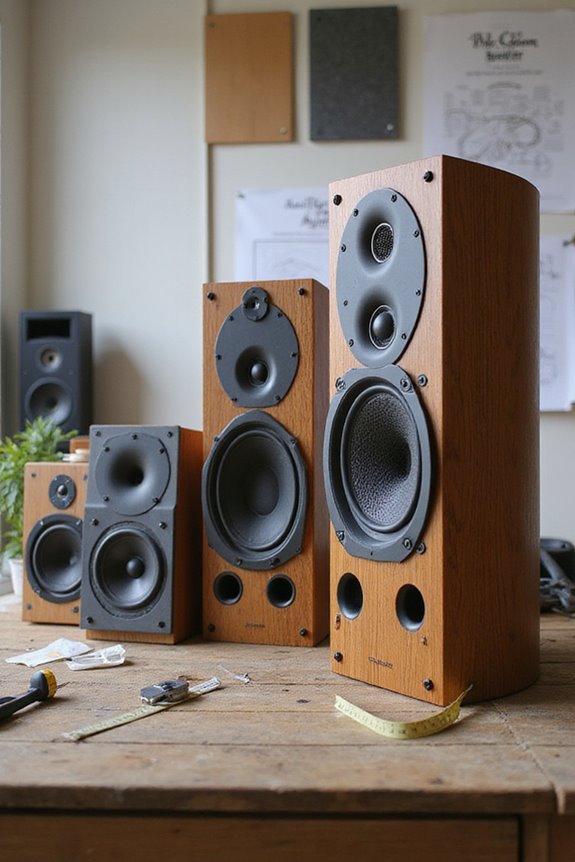
Choosing the right type of speaker can greatly impact your audio experience, whether you’re setting up a home theater or simply enjoying music in your living room. Each type of speaker serves specific applications, so let’s break down our options.
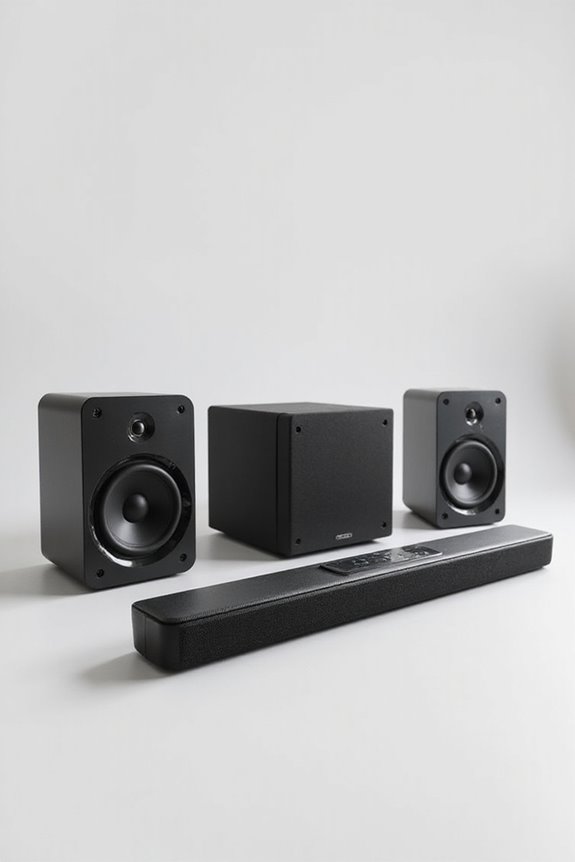
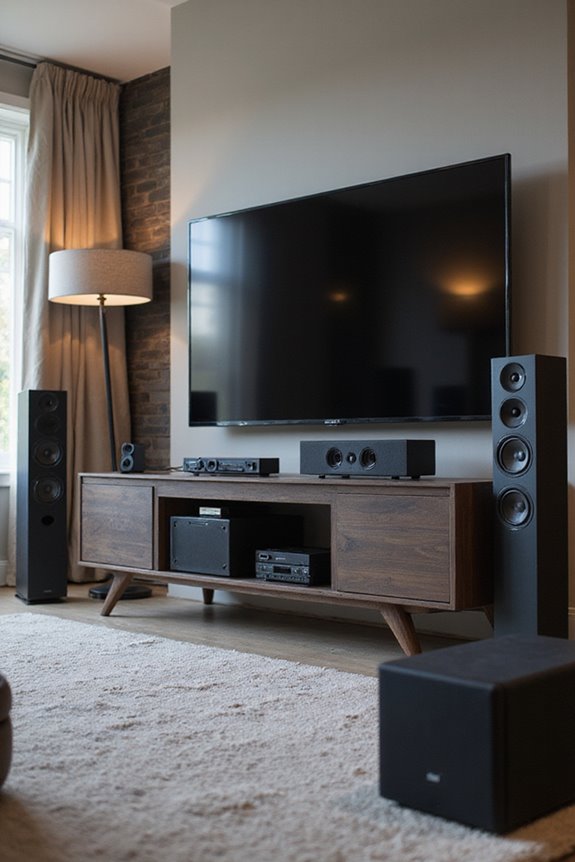
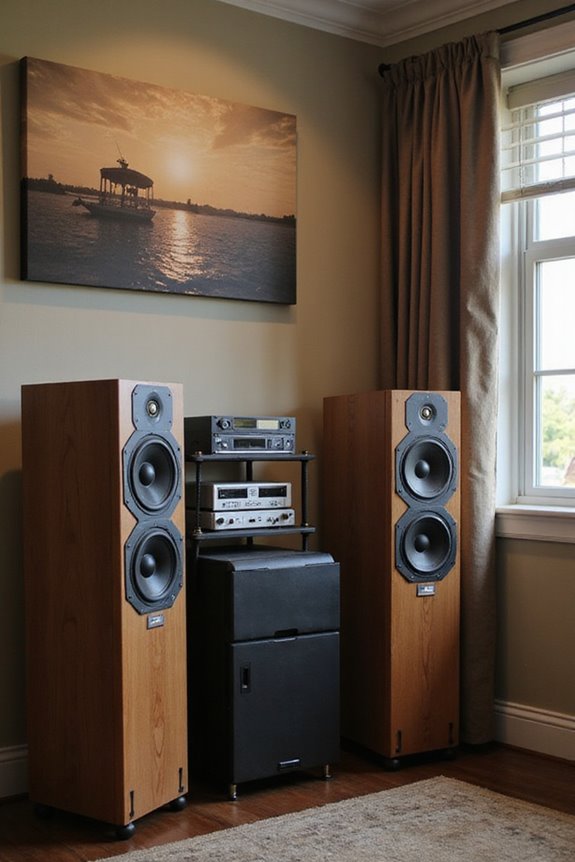
Floor-Standing Speakers deliver powerful sound, best for larger spaces. If we love deep bass and clear highs, these are fantastic as main channels.
Bookshelf Speakers offer compact solutions for smaller rooms, providing great detail and clarity.
For crystal-clear dialogue in movies, Center Channel Speakers are critical to anchor our audio experience.
Don’t forget about Subwoofers to enhance bass, and Surround Speakers to immerse us in soundscapes. By considering these types of speakers, we can tailor our listening space to our specific needs and preferences. Additionally, it’s essential to evaluate connectivity options when selecting speakers to ensure they fit seamlessly into your audio setup.
Recommended Products

LS60 Wireless aims to bring high-fidelity sound to more people in their homes. With the combination of all our key technologies, LS60 Wireless delivers high-fidelity sound up to 24bit/384kHz.
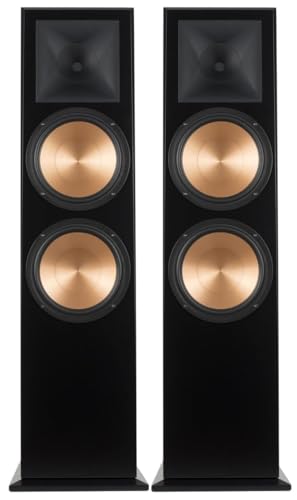
90° X 90° Tractrix Horn: The compressed molded rubber construction adds high-frequency damping to reduce harshness and improve detail. This creates the cleanest, most natural sound possible | All New Driving Force: This speaker has an impressive 1 3/4" titanium diaphragm compression driver
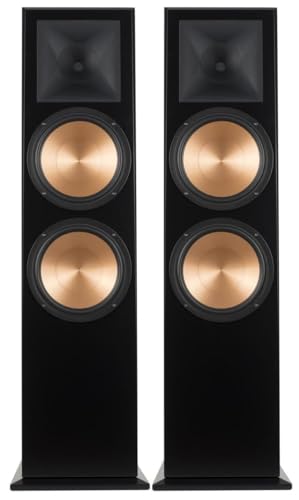
90° X 90° Tractrix Horn: The compressed molded rubber construction adds high-frequency damping to reduce harshness and improve detail. This creates the cleanest, most natural sound possible | All New Driving Force: This speaker has an impressive 1 3/4" titanium diaphragm compression driver
Assessing the Impact of Room Acoustics

Evaluating room acoustics is essential for achieving the best audio experience possible. We all know that our room’s shape, size, and surface materials can greatly affect sound. For instance, small rooms often create rapid room reflections that can distort audio, while larger rooms might prolong reverberation, muddying clarity. To enhance our listening experience, we can implement acoustic treatment, like bass traps and diffusers, which minimize these disruptive reflections. By simply paying attention to speaker height and placement relative to ceilings and walls, we can also reduce boundary interference. These adjustments not only optimize the soundstage but also guarantee the speakers we choose resonate well within our unique space, ultimately improving our overall enjoyment of music. Additionally, selecting the right surround sound technology can further elevate audio clarity and depth in any room.
Recommended Products

Reduce Noise: After professional testing, the sound barrier rate of this product is as high as 70%, effectively reducing about 30-40 decibels of noise and having excellent sound insulation effect

Includes 4 Pieces per Case | 31.68 Square Ft. Per Case | Case Weight 48 lb |TILE SIZE: 9.5 in. W x 120 in. L x 0.8 in. T

SPECS - Length: 96" | Width: 80" | Material: Cotton and Polyester with Zig-Zag Stitching | Weight: 12 lbs each | Blanket and Thread Color: Black | Use: Sound Absorption, NOT Sound Blocking or Sound Proofing | NRC Rating: 0.35 | Quantity: (60) Sound Blankets
Matching Speaker Power and Sensitivity to Your Space

To maximize our audio experience, understanding the relationship between speaker power, sensitivity, and the specific characteristics of our listening environment is vital. Different room sizes affect our power requirements considerably. For instance, moving from an 80 cubic meter room to 160 cubic meters can double our power needs, meaning we may require up to 200 watts instead of 100. Additionally, choosing speakers with higher sensitivity ratings, ideally 90 dB and above, allows us to achieve desired volume levels with less power, especially in larger spaces. This becomes essential as seating distance increases, where sound pressure levels (SPL) drop considerably. By carefully matching speaker sensitivity to our room size and listening position, we can enjoy the best sound without overloading our amplifiers. Furthermore, selecting amplifiers with impedance compatibility ensures that your system operates efficiently without overheating or distortion.
Recommended Products

Three-way, 15” horn-loaded loudspeakers

Cutting-Edge GPU: Elevate your gaming experience with the NVIDIA GeForce RTX 5070 Ti laptop GPU. Featuring a 12GB DDR7 graphic memory, Advanced Optimus support, and cutting-edge technologies like DLSS and Frame Generation, this powerful GPU delivers stunningly smooth performance and unparalleled frame rates. Plus, NVIDIA Advanced Optimus takes it further by seamlessly switching between the iGPU and dGPU based on the task, maximizing both performance and battery life.

STELLAR SOUND AND POWERFUL SPEAKER: The Proreck PR-210BP Powered Array Speaker delivers exceptional sound quality with two 10" woofers and a 3" Ferrite for superior audio performance. Its built-in Class-D amplifier provides an impressive 5000W P.M.P.O , creating an immersive listening experience.
Optimal Speaker Placement Strategies

Speaker placement can make all the difference in how we experience sound, complementing the careful matching of our audio equipment to our environment. To achieve ideal speaker alignment, we should arrange our main stereo speakers and listeners in an equilateral triangle. This setup enhances stereo imaging and depth perception, while ensuring a clear and balanced soundstage.
We must also consider distance from walls, avoiding corners to prevent bass muddiness. Using acoustic treatments, like absorbers or diffusers, can help manage reflections, offering a richer audio experience. Additionally, aligning the speakers’ tweeters with our ear height guarantees accurate sound reproduction, while angling surround speakers slightly towards us boosts realism. With these strategies, we’ll create an inviting auditory environment we can all enjoy together. Moreover, ensuring proper speaker placement significantly impacts the overall audio experience.
Using Technology and Tools for Speaker Calculation
When exploring the right number of speakers for our space, we can benefit greatly from using specialized technology and tools. Utilizing a speaker calculator, we can input precise room dimensions, taking into account factors like ceiling type and obstructions. This guarantees reliable recommendations for speaker quantity and placement, tailored to our specific needs.
Moreover, acoustic modeling offers invaluable insights by simulating sound wave behavior in our environment. These advanced tools can actually predict ideal speaker placement, minimizing echo and interference. With features like sound coverage heatmaps, we can visualize how sound will interact within our room. By leveraging these tools, we guarantee our audio experience is immersive and fulfilling, allowing us to truly enjoy our listening environment.
Recommended Products

Powerful 1000W Sound System: Elevate your music experience with this large bluetooth speaker featuring a built-in 1000-watt amplifier for crisp, clear audio; Speaker dimensions: 14"L x 16"W x 27"H.
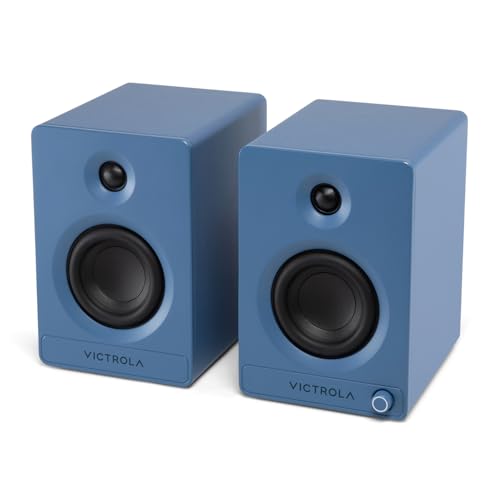
POWERFUL BOOKSHELF SPEAKERS – Experience rich, room-filling sound delivering deep bass, clear vocals, and a balanced soundstage.

ARTISANAL SOUND AMPLIFICATION – Experience your music in a new way. This passive speaker naturally boosts your phone's volume by up to 15 decibels without any electricity. The unique gramophone horn design enriches the audio, creating warm, rich, and clear acoustic tones perfect for music, podcasts, and hands-free calls.
The Role of Subwoofers in Your Sound System
Subwoofers play an essential role in elevating our overall sound experience by delivering the deep bass frequencies that standard speakers often struggle with. They reproduce low-frequency sounds, covering the key bass range that enhances our favorite music genres and movie soundtracks. Through effective subwoofer integration, we can achieve a balanced audio landscape, allowing main speakers to focus on mid and high frequencies.
Notably, proper bass management is fundamental for optimizing our systems. By setting crossover frequencies around 80-200 Hz, we can guarantee seamless blending with our main speakers. Additionally, using multiple subwoofers can minimize bass peaks and nulls, providing an immersive listening experience. Ultimately, when paired correctly, subwoofers enrich our audio systems and transform how we enjoy sound.
Recommended Products
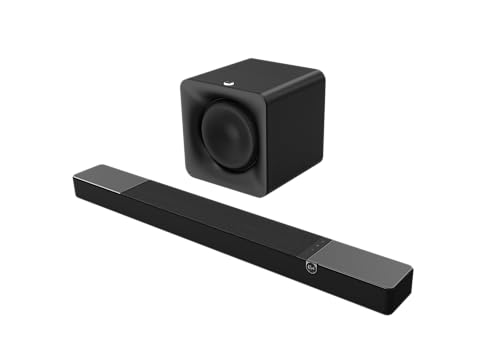
POWERED BY ONKYO: We’ve teamed up with Onkyo, combining their decades of proven manufacturing and tech prowess with our classic Klipsch acoustics, to ensure your home entertainment system is as epic in audio quality as it is in reliability.

Spun Copper IMG Woofer: Spun copper front-firing cerametallic woofers help create tight musical bass | All Digital Amplifier: The all digital amplifier of this sub delivers 200 watts continuous, 400 watts dynamic power
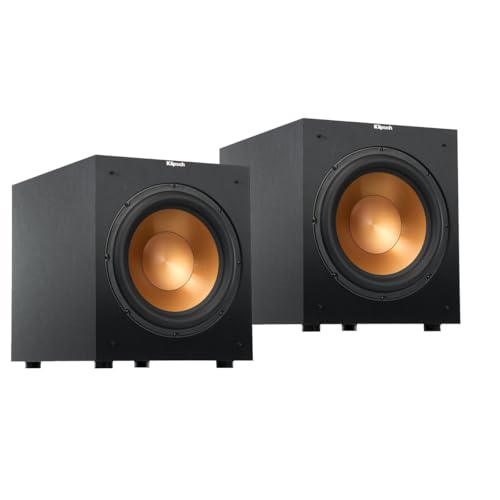
DEEPER BASS - Experience movies and music like never before with a 12-inch high-excursion IMG front-firing woofer, delivering room-filling bass and impactful low frequencies down to 29Hz.
Adapting Speaker Choices for Unique Room Shapes
Choosing the right speakers for unique room shapes isn’t just about size; it’s also about optimizing sound performance in spaces that can be challenging. Irregular rooms, for instance, often require specific speaker styles, like bookshelf or stand-mounted options, to fit snugly into corners or along walls. By measuring room dimensions, we can guarantee these speakers are placed to avoid issues with sound reflections. In longer, narrower rooms, positioning speakers along the long wall maximizes soundstage. For those of us with open concepts, using smaller speakers or a multi-channel system helps provide even coverage. Remember, adjusting speaker height and tilt can also mitigate any asymmetrical obstacles, guaranteeing we achieve that sought-after balanced sound experience.
Frequently Asked Questions
Can I Mix Different Speaker Types in One System?
When we consider mixing different speaker types in one system, we should prioritize speaker compatibility for ideal sound quality. It’s best to stick with the same brand to guarantee a cohesive listening experience we can all enjoy.
How Do I Know if My Speakers Are Too Powerful?
Have you ever felt your ears ring after listening? If our speakers’ wattage overwhelms our space, we’re compromising sound clarity. Let’s explore signs that hint our setup might just be too powerful for comfort.
What Are the Signs of Speaker Distortion?
When we notice buzzing or muffled sound, it’s a sign of speaker distortion. Different speaker types can impact audio clarity, so we should monitor for these signs to ascertain our listening experience remains enjoyable and clear.
Can I Use Outdoor Speakers Indoors?
We can definitely blend outdoor sound with our cozy spaces! While outdoor speakers thrive in open air, adjusting for indoor acoustics helps us enjoy their robust performance, creating an inviting atmosphere that feels just right together.
How Often Should I Replace My Speakers?
When we think about how often to replace our speakers, we should consider speaker lifespan and replacement indicators. If we notice a decline in sound quality or changing preferences, it might be time for an upgrade.