As an Amazon Associate, we earn from qualifying purchases. Some links on this site are affiliate links at no extra cost to you. Our recommendations are based on thorough research and editorial judgment.


Which Audio Equipment Settings Improve Sound Quality?

To improve sound quality, we should focus on optimizing EQ settings, speaker placement, and volume control. Start with a neutral EQ, making small adjustments to enhance clarity—cutting frequencies around 300–500Hz helps reduce muddiness. Positioning speakers in an equilateral triangle enhances stereo imaging, while keeping them away from walls prevents distortion. Finally, maintaining consistent volume prevents ear fatigue. Staying attentive to these details guarantees a rich audio experience, and there’s more to explore to refine our setup.
Key Takeaways
- Start with a neutral EQ setting and make small adjustments, focusing on cutting frequencies to preserve clarity and avoid distortion.
- Position speakers in an equilateral triangle, angling them towards the listening position for optimal stereo imaging and clarity.
- Implement gradual volume adjustments to prevent distortion and ear fatigue, keeping gain levels monitored to ensure a clear playback.
- Regularly calibrate your audio equipment using built-in or external tools to maintain balanced sound quality and performance.
- Keep software and firmware up to date to enhance sound processing and overall equipment functionality.
Understanding Equalizer (EQ) Settings
You may be interested


Equalizers, or EQs, are powerful tools that help us shape sound to our preferences. By mastering the EQ fundamentals, we can target specific frequency ranges to enhance our listening experience. For instance, graphic EQs provide fixed frequency bands that are simple to adjust, making them ideal for casual use. On the other hand, parametric EQs allow precise tuning of center frequencies, bandwidth, and gain, letting us optimize vocals or enhance bass response for that perfect sound profile.
When we tweak the low frequencies, we boost bass; adjusting mid frequencies can make vocals stand out, while high frequencies improve clarity. Understanding these frequency responses empowers us to create a balanced audio environment tailored to our unique tastes. Additionally, many modern amplifiers, such as the Pyle 200W Stereo Power Amplifier, come with built-in EQ controls, allowing for easy customization of sound directly from the device.
Optimizing Speaker Placement and Angling

Optimizing speaker placement and angling is just as important as fine-tuning equalizer settings for achieving high-quality sound. To create an ideal listening experience, let’s arrange our speakers and listening position in an equilateral triangle, making sure the speaker distance from each other and us is equal. We should angle each speaker at about 60 degrees toward the listening position to enhance stereo imaging.
Also, consider the speaker height; aligning tweeters with our ears when seated maximizes clarity. Avoid placing speakers too close to walls, as this can muddy the sound. Let’s experiment with different placements, keeping in mind room dimensions and the golden ratio, to achieve the best balance between sound clarity and bass response. Additionally, remember to consider room acoustics as it can significantly improve overall sound quality.
Recommended Products

PROFESSIONAL MICROPHONE STAND – Adaptable Overhead Studio Boom Stand Supports a Variety of Setups for Vocal, Group, Guitar, Piano & Drum Performance

Two-component design made of high density acoustic foam
Balancing Volume and Equalization

When we aim for superior sound quality, finding the right balance between volume and equalization is essential for an enjoyable listening experience. To achieve this, we should maintain volume consistency to prevent distortion and ear fatigue. Gradual adjustments in volume help us detect feedback while guaranteeing clarity. Using loudness controls at lower volumes can boost bass and treble without losing fine details, enhancing our dynamic range.
Let’s start with a neutral EQ setting to assess our sound and then apply small adjustments focused on specific frequencies. By cutting frequencies instead of boosting, we preserve clarity and avoid unwanted distortion. Fine-tuning these elements together guarantees we get the best out of our audio, creating a richer and more immersive listening experience. Additionally, understanding impedance compatibility between your amplifier and speakers can significantly affect overall sound quality.
Recommended Products

EXPERIENCE HIGH-RESOLUTION AUDIO PRECISION - With 32 bit / 96 kHz audio processing and a 14 Hz - 35 kHz frequency range, the Devialet Phantom Ultimate 108 dB delivers music with utmost precision, free from distortion, saturation, or background noise.

WHILE SUPPLIES LAST @ $2499 (save $800). Built on our 70+ years of audio legacy & the legendary NAKAMICHI DRAGON name, this #1 rated wireless home theater sound system features a no compromise 11.4.6 ch surround sound architecture powered by our Pro Cinema Engine. Breakthrough plug and play performance made simple.

HIGH-POWER 2-CH INTEGRATED AMPLIFIER - With 140W/channel and Advanced AL32 Processing Plus, the Denon PMA-1700NE Integrated Amplifier can drive a range of speakers; delivering detailed, distortion-free home theater audio at 384 kHz/32-bit resolution
Making Frequency-Specific Adjustments
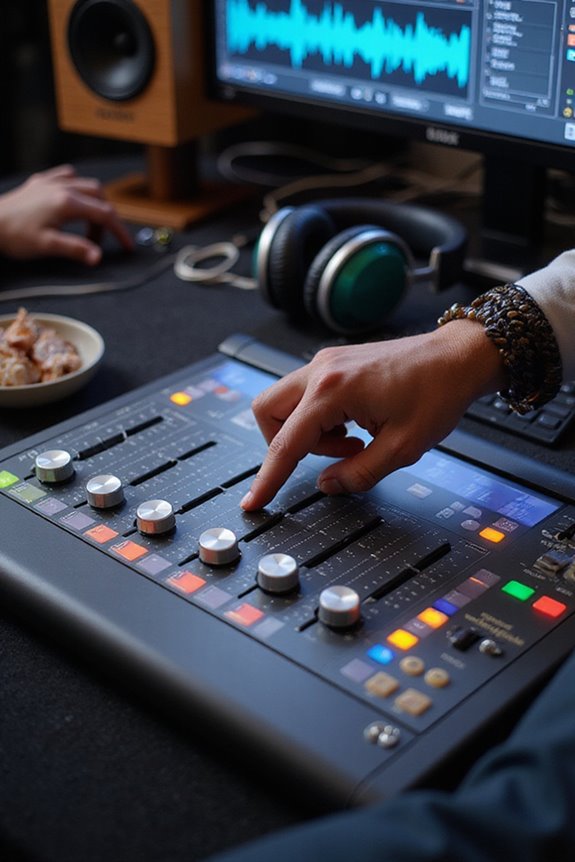
Making precise adjustments to specific frequency bands allows us to shape our audio experience considerably. By understanding the effects of sub-bass, bass, midrange, and treble, we can enhance clarity and warmth in our sound. For example, cutting around 300–500Hz can reduce muddiness, making vocals clearer. Applying the Q factor is vital; a narrow Q can target specific issues like resonance without affecting nearby frequencies. For instance, when boosting around 2–4kHz for presence, we should be cautious to avoid harshness. By focusing on these frequency-specific adjustments, we not only improve our audio quality but also create a more enjoyable listening experience that resonates with all of us. Let’s embrace these techniques and elevate our sound together! Additionally, integrating built-in effects from guitar amps can further enhance sound customization and versatility in our audio setups.
Managing Preamp and Gain Control

A solid foundation in gain staging is essential for achieving ideal audio quality. Effective preamp calibration starts with turning the input gain down to prevent clipping. We set the output gain to unity gain, ensuring consistent levels. Our goal is a preamp gain around -20 dBFS to maintain a strong signal-to-noise ratio.
When we monitor gain levels closely, we can avoid distortion while giving performers clear playback. If we find ourselves compensating lower preamp gain with faders, noise creeps in. Throughout our mixing process, it’s vital to prioritize preamp adjustments. By keeping faders at unity and focusing on gain monitoring, we stay in control, allowing our recordings to shine with clarity and fidelity, making each mix a success. Additionally, selecting amplifiers that support advanced audio formats can further enhance playback quality and immersion.
Recommended Products


Compact broadcast mixer with 4 mic/line channels, 4 Dual Source stereo channels and 2 Telco channels

DuoPre XLR Microphone preamps, including 48V Phantom power for condenser microphones and up to 69dB of gain. Each preamp uses two gain stages to provide a full and accurate sound across the entire gain range with enough power for even the most gain hungry mics.
Testing and Fine-Tuning for Various Audio Types
Optimizing audio quality can’t stop at gain management; it must extend into testing and fine-tuning for different audio types. Testing bass phase, for instance, helps us determine subwoofer placement for richer low-end output, especially with genres like EDM. By adjusting crossover settings based on our track selection, we can enhance clarity for vocal-heavy music or improve dialogue in films. As we place our speakers, slight angling or spacing can dramatically change instrument clarity and soundstage. Listening preferences vary, so iterating with familiar tracks allows us to identify what works best. Ultimately, it’s about honing our setups to suit what we love to hear, ensuring every note resonates with precision and balance in our unique audio experiences.
Recommended Products

2,200W Powered Subwoofer with 18" Woofer

Advanced Acoustics: Newly designed Cerametallic woofers are exceptionally light and extremely rigid, providing remarkable low frequency response with minimal cone breakup and distortion for higher, cleaner output using less amplifier power | Balanced Performance: Striking the optimal balance between amplifier power, driver capability and cabinet volume, Reference Premiere subwoofers achieve maximum low frequency extension with great output, accuracy and speed
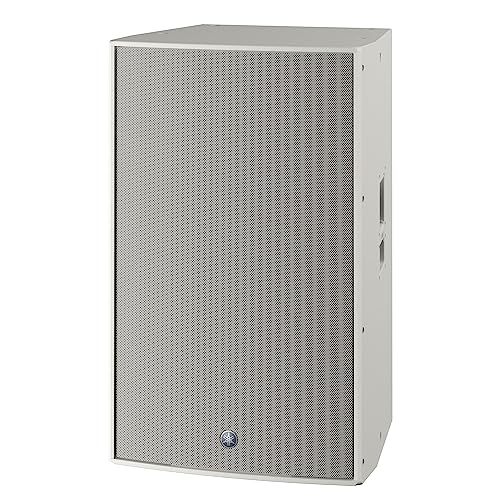
3-way powered loudspeaker with a 2” HF, an 8 ” MF and a 15" LF
Utilizing EQ Presets as a Starting Point
How can we make the most of EQ presets when setting up our audio systems? EQ presets serve as a fantastic starting point, offering genre enhancements with tailored frequency curves for styles like rock, jazz, and classical. They simplify our initial setup, removing the guesswork that can overwhelm beginners. For instance, rock presets typically boost bass and treble, while jazz ones elevate mids to highlight instruments. Although presets provide a balanced base, we should fine-tune them for our specific listening environments. By making small adjustments, we can avoid errors like overboosting, ensuring our sound remains natural. Ultimately, using these presets helps us learn audio customization, making it easier to explore our unique tonal preferences while developing our EQ skills.
Addressing Room Acoustics and Bass Frequencies
Addressing room acoustics is essential for achieving the best bass response in our audio setups. Implementing room correction technologies can smooth out frequency response by tackling pesky acoustic peaks, ensuring our bass sounds clean and powerful. We should consider subwoofer placement, using multiple subwoofers to better distribute bass energy across listening positions, which enhances our overall experience. Adding bass traps in corners helps absorb low frequencies, while acoustic treatments at first reflection points minimize harsh reflections from reflective surfaces. Balancing soft materials and strategic furniture placement promotes sound diffusion, helping to create a cohesive audio environment. Together, we can elevate our listening experience and enjoy every note of our favorite tracks.
Recommended Products
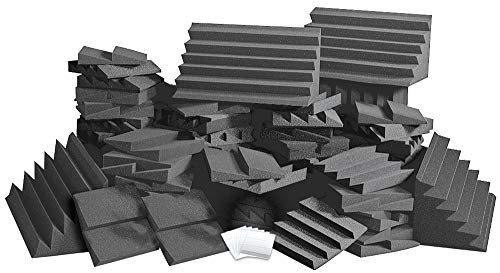

High NRC Rated Core .95 or higher avg.

Terrific for noise reduction. Six inch thick foam is used to absorb low, mid and high frequencies and to control and trap echoes. Thicker wedge style is better performing compared to eggshell foam and other thinner foams. These super thick sound foam panels provide absolute sound deadening with an NRC of 1.0 out of 1.
Regularly Revisiting and Adapting Settings
After we’ve fine-tuned our room acoustics and bass frequencies, it becomes clear that our audio equipment settings also require regular attention. Regular calibration isn’t just a one-time task; it helps maintain balanced sound quality. By using built-in or external calibration tools, we can measure speaker levels and adjust settings accordingly.
Environmental adjustments, such as changes in furniture or humidity, can impact sound, so revisiting our EQ settings guarantees peak performance. It’s essential to avoid the “set it and forget it” mindset. With simple checks on speaker placement and component compatibility, we can enhance our audio experience and keep it fresh and dynamic. Regular updates to software and firmware can also make a significant difference in sound processing.
Frequently Asked Questions
How Do I Choose the Best Speakers for My Audio Needs?
Choosing the best speakers feels like crafting a symphony together. We need to contemplate speaker types that resonate with our sound preferences, ensuring our shared listening experience creates harmony in any room we cherish.
What Types of Audio Cables Enhance Sound Quality?
When choosing audio cables, we should consider balanced cables for reduced noise and digital cables for enhanced clarity. Selecting quality options helps us all achieve that immersive sound experience we crave together.
How Does the Room Size Affect Audio Performance?
As we gather to experience music, room acoustics and sound reflections shape our enjoyment. Larger spaces offer rich depth, while smaller ones may trap us in echo—understanding this dance helps us create a shared sonic oasis.
Should I Upgrade My Audio Source for Better Sound Quality?
Absolutely, we should consider upgrading our audio source for better sound quality. By choosing high-resolution formats, we enhance clarity and detail, transforming our listening experience into something truly immersive and enjoyable together.
What Are Some Common Mistakes in Audio Setup?
When we set up audio, we can forget proper microphone placement and equalizer settings. By paying attention to these aspects, we can enhance clarity and richness in our sound. Let’s work together to fix this!