As an Amazon Associate, we earn from qualifying purchases. Some links on this site are affiliate links at no extra cost to you. Our recommendations are based on thorough research and editorial judgment.

Which Audio Equipment Issues Require Professional Repair?

When we encounter audio equipment issues, some clearly call for professional repair. For instance, speaker malfunctions like cone damage or voice coil failures can distort sound. Amplifier power supply troubles, such as blown fuses or overheating, jeopardize performance. Vintage gear often requires expert attention for worn belts or dirty heads. Additionally, studio calibration guarantees consistent audio quality. If your equipment’s showing any signs of distress, professional help can restore its integrity, and there’s more to explore about tackling these challenges.
Key Takeaways
- Speaker cone damage and voice coil failures can result in distorted sound and require professional repair to restore audio quality.
- Amplifier power supply issues, such as blown fuses or malfunctioning components, necessitate expert intervention for proper functionality and safety.
- Complex repairs for tape decks, including dirty heads and worn belts, often require professional expertise to ensure optimal performance.
- Calibration and maintenance of studio equipment are crucial for consistent audio output, making professional help essential for effective adjustments.
- Audio visual equipment issues, such as loose connections and signal degradation, often need skilled technicians for reliable troubleshooting and repair.
Common Speaker and Loudspeaker Malfunctions
You may be interested

As we explore common speaker and loudspeaker malfunctions, it’s crucial to understand that even minor issues can considerably impact audio performance. One frequent problem is speaker cone damage, which leads to distorted sound when the cone is torn or punctured. We should also consider voice coil failures, as overheating can cause crackling sounds or no output at all. Crossover network issues may create unbalanced sound due to faulty components, while loose wiring connections can result in intermittent audio loss. If we notice any of these signs, it’s important to address them promptly. Additionally, ensuring that the amplifier’s impedance compatibility with the speakers is correct can prevent further damage and maintain sound quality. Taking these steps can help us maintain our audio equipment and guarantee it consistently delivers the quality we expect in our listening experience.
Amplifier Power Supply and Thermal Issues

When we explore amplifier power supply and thermal issues, understanding their impact on performance can make a significant difference. A failing power supply often manifests with a blown mains fuse or malfunctioning components like rectifiers and capacitors. These issues lead to inadequate thermal management, causing overheating and potentially triggering protection circuits. For instance, when heat sinks get clogged with dust, they can’t dissipate heat efficiently, risking your amp’s health. We can proactively maintain our amplifiers by replacing damaged parts and ensuring proper cable sizing to minimize voltage drop. Additionally, ensuring proper power output is critical to avoid overloading the amplifier and causing further damage. By keeping an eye on these aspects, we can enhance our systems’ reliability and longevity. Remember, timely diagnosis and repair are essential for peak performance!
Complex Repairs for Tape Decks and Vintage Audio Equipment

Maintaining vintage audio equipment, particularly tape decks, can seem intimidating due to their unique designs and intricate components. When we explore tape deck restoration, we often encounter playback issues caused by dirty heads or worn belts. These problems necessitate professional cleaning and alignment to restore rich sound quality.
We should also consider transport mechanisms— tape jams and irregular speeds can arise from aging belts and gears. During vintage audio servicing, we recommend replacing all degraded belts simultaneously. Additionally, evaluating the heads and capstans is essential; neglect can lead to significant audio degradation.
Sourcing specific parts for complex repairs can be challenging, underscoring the value of expert involvement. Ultimately, maintaining our cherished equipment becomes worthwhile in preserving originality and performance. Furthermore, understanding the importance of power output can also enhance the audio experience when integrating vintage equipment into modern setups.
Importance of Studio Maintenance and Calibration
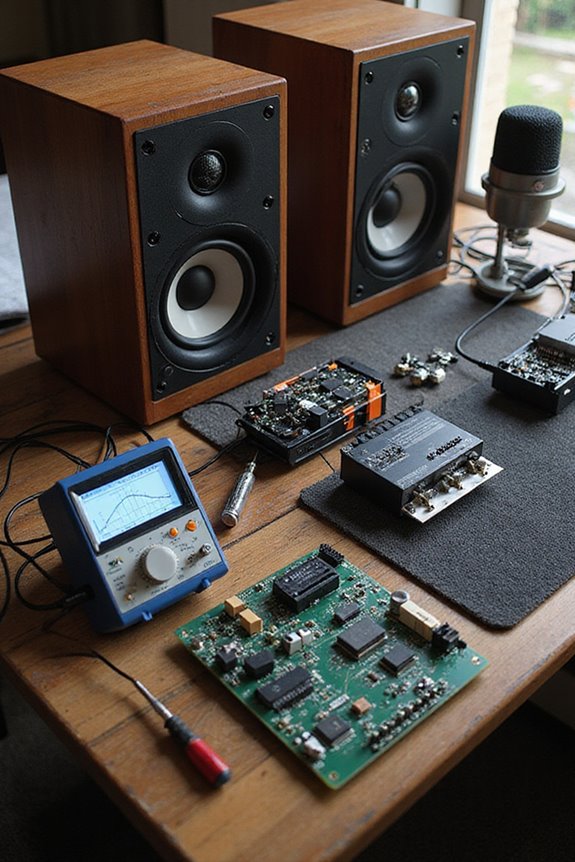
Studio equipment doesn’t just need to look good; it also has to perform flawlessly to achieve the best audio and visual experiences. Regular studio upkeep guarantees our gear delivers audio consistency and peak results. Let’s remember that dust accumulation can cause overheating, potentially harming performance. By using soft cloths, cleaning vents, and regularly inspecting connections, we can keep our equipment in top shape. Calibration is equally essential; it fine-tunes brightness, color balance, and audio levels to match our unique environments. Regularly testing speaker placements helps maintain balanced sound. Staying on top of maintenance schedules and updating software also prevents minor issues from escalating. Additionally, proper matching of amplifiers and microphones is vital for optimal audio performance. Together, we can protect our investments and guarantee our studio functions efficiently for years to come.
Challenges in Common Audio Visual Equipment Repairs

Every AV professional knows that tackling repair issues is part of the job, and it can be quite the challenge. Audio interference can arise from loose connections, leading to poor sound quality or complete losses—we’ve all experienced that frustration. Additionally, signal degradation often occurs when outdated firmware or incompatible formats create synchronization headaches. Display issues, like pixel distortion in our projects, can distract from the message we want to convey. Network faults further complicate matters with intermittent connections. When these challenges arise, we realize that a professional touch may be necessary to guarantee everything functions correctly. By addressing these common equipment problems, we can create a seamless AV experience that truly resonates. Moreover, ensuring compatibility with various receivers can help prevent connectivity issues that may require expert assistance.
Component Failures and Soldering Precision
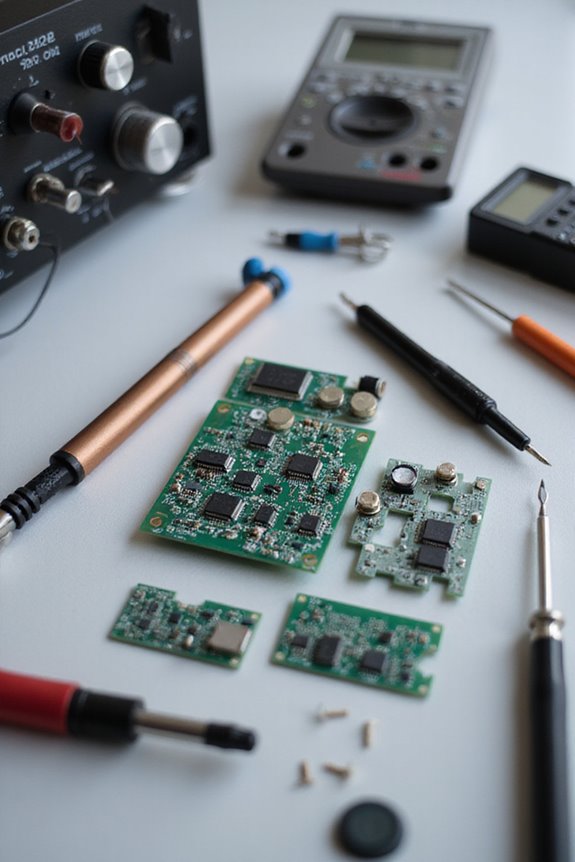
When dealing with audio equipment, it’s important to recognize how component failures can impact performance, especially when we rely on precision soldering for effective repairs. We’ve all seen those pesky solder joint failures that create frustrating intermittent connections. These can lead to disappointing audio quality, including noise and dropouts. Capacitor shorts, particularly with tantalum types, can even risk damaging our gear—leading to costly repairs. Precision in soldering guarantees that each joint maintains a solid electrical connection, critical for reducing unwanted noise. It’s significant we handle components carefully; excessive heat during soldering can damage sensitive parts. By embracing meticulous soldering techniques, we can enhance the longevity and reliability of our audio equipment, making certain our sound remains as great as we expect.
The Need for Professional Alignment and Calibration
In order to achieve ideal audio performance, seeking professional alignment and calibration can make a significant difference. We recognize that the listening environment plays a vital role, which is why a thorough acoustic analysis is essential. Professional calibration identifies reflections and absorptions that affect frequency response, whether in our home theater or car audio systems.
Adjusting equalization helps balance out those imperfections, guaranteeing we enjoy sound that closely matches the original recording. Additionally, time alignment synchronizes speaker output, enhancing clarity and stereo imaging. Utilizing specialized tools like RTAs and calibration software guarantees precision in tuning our systems. In the end, professional expertise can mean the difference between average sound and an exceptional listening experience we all seek.
Frequently Asked Questions
How Can I Prevent Damage to My Audio Equipment?
To prevent damage to our audio equipment, we should practice preventative maintenance and guarantee proper equipment storage. By keeping everything safe, organized, and clean, we’ll protect our gear and enjoy exceptional sound together for years to come.
What Are Signs That My Studio Needs Maintenance?
Our studio’s heartbeat relies on regular upkeep; signs of fading sound or drifting levels whisper for attention. We safeguard equipment longevity by staying vigilant, ensuring every connection hums harmoniously and our creative spirit remains vibrant.
How Often Should I Have My Audio Equipment Calibrated?
We should calibrate our audio equipment regularly—typically before and after sessions, and annually for maintenance. Proper calibration frequency guarantees accurate equipment tuning, enhancing our performance and compliance in any audio endeavor we undertake together.
Can I Perform Repairs on Vintage Equipment Myself?
Can we really tackle vintage troubleshooting ourselves? While some DIY techniques are safe, we should be careful with complex repairs. Together, let’s explore what we can handle without risking damage to our cherished gear.
What Should I Do Before Seeking Professional Repair Services?
Before seeking professional repair, we should conduct thorough equipment inspections and apply troubleshooting tips. By evaluating damage, testing functionality, and ensuring clean connections, we can often resolve issues together or identify what truly needs expert help.