As an Amazon Associate, we earn from qualifying purchases. Some links on this site are affiliate links at no extra cost to you. Our recommendations are based on thorough research and editorial judgment.

How To Select A Guitar Based On Hand Size?

When selecting a guitar based on hand size, we need to measure the hand span and length. A scale length between 615 mm and 664 mm is ideal for different hand sizes. For instance, smaller hands benefit from shorter scales, making chord stretches easier. Understanding our hand dimensions impacts playability greatly, especially with wider chords. By knowing our measurements, we can find the perfect guitar fit and enhance our playing experience. Let’s explore more options to suit our unique needs.
Key Takeaways
- Measure your hand length from the wrist crease to the tip of your middle finger to understand your size.
- Assess your hand span by spreading your fingers and measuring from the tip of your thumb to the tip of your pinky.
- Choose a guitar scale length that matches your hand size; smaller hands benefit from shorter scale lengths like 615 mm.
- A C-shaped neck profile can enhance comfort and facilitate quick chord changes, especially for those with smaller hands.
- Experiment with different guitars to find the right fit, as personal comfort plays a crucial role in playability.
Understanding Hand Measurements
You may be interested



When we’re selecting the right guitar, understanding hand measurements is essential because they directly impact our comfort and playability. To get started, we can use simple hand measurement techniques like measuring from the wrist crease to the tip of our middle finger. Utilizing measurement tools such as a ruler or flexible tape can help guarantee accuracy.
We should also measure our hand span—how far we can stretch our fingers—from thumb tip to pinky tip. Keeping these measurements in mind helps us choose guitars that fit our size and reach. By knowing our measurements, we can confidently select guitars tailored to our style, promoting better technique and enjoyment. This effort can make a significant difference in our playing experience together. Additionally, choosing a guitar with a C-shaped neck profile can enhance comfort and facilitate fast chord changes, which are essential for punk music.
Recommended Guitar Scale Lengths
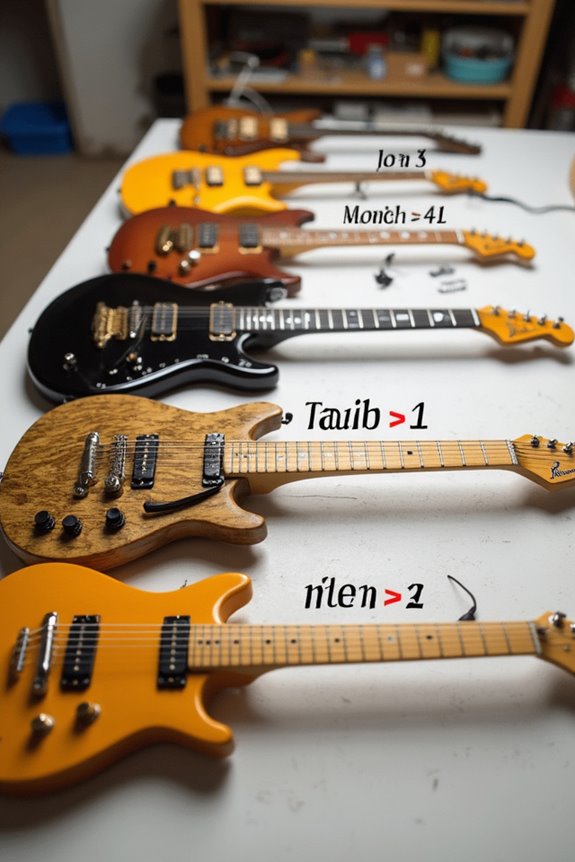
Choosing the right guitar scale length is essential for our overall comfort and playability. Scale length impacts not only the guitar size but also vital aspects like fret spacing and string tension. For those with a hand span of 250 mm or greater, a 664 mm scale length is ideal, offering a full-size experience. If our hand span falls between 230–250 mm, a 656 mm length works well. Players with smaller hands, spanning 170 mm or less, should consider a 615 mm scale length guitar for easier playability. Ultimately, trying different guitars allows us to discover which scale length feels best, balancing comfort and sound, ensuring we enjoy our music journey together! Additionally, factors such as body shape and depth can also influence playability and sound quality.
Recommended Products
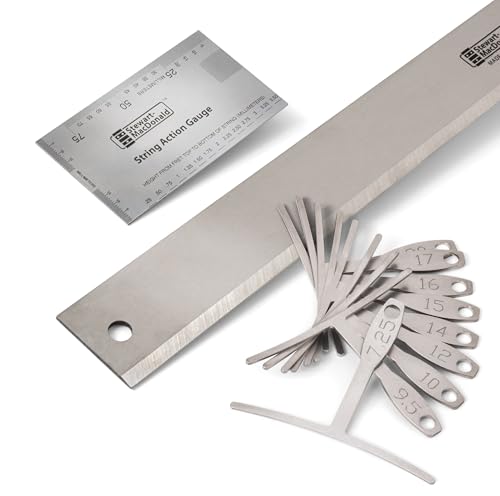
BUILT TO LAST: Backed by StewMac’s Lifetime Promise for professional-grade durability

NOTCHED SHORT SCALE BASS & BARITONE GUITAR STRAIGHT EDGE: One edge fits 30.2", 30.5" and 30" short-scale basses and baritones. The other edge fits baritone scales falling between 28" and 28.5"

SHORT SCALE GUITAR FIT: Model #4012 is built for short scale guitar setup work with one notched edge compatible with 24.75 inch 24.9 inch and 25 inch fretboard scales to help check neck relief and fingerboard flatness plus a 16 3/8 inch flat straightedge on the opposite side for fret leveling high fret detection and general repair work
Correlation Between Height and Hand Size
Understanding the connection between height and hand size can greatly enhance our guitar selection process. Research indicates that taller individuals typically have larger hands. For instance, studies show a strong positive correlation between height variations and hand proportions, particularly in males. This means that if we’re on the taller side, our hand length is likely greater, aiding in grip and reach.
For example, left hand length often correlates more strongly with height, suggesting that if we prioritize our left hand while playing, it could influence our choice of guitar. This awareness helps us choose instruments that fit our individual needs, ensuring a more comfortable and enjoyable playing experience. Additionally, considering string gauge choices is crucial, as it significantly influences overall playing comfort. So, let’s embrace our unique measurements as we shop for that perfect guitar!
Impact of Hand Size on Playability
Though hand size can feel like a limiting factor, particularly for those with smaller hands, it’s essential to recognize how it influences playability. For example, wider chord voicings can challenge our finger stretch, leading us to seek alternatives that accommodate our reach. Guitars with shorter scale lengths greatly ease these demands by reducing the distance between frets. This aspect aids in achieving better thumb position while promoting finger independence, letting us navigate the fretboard with confidence. It’s also worth noting that slim neck profiles help improve our comfort. Ultimately, adapting our techniques and exploring various instrument options allows us to overcome hurdles and enjoy our unique musical journeys. Additionally, considering power output considerations ensures you select an amp that complements your playing style and environment.
Recommended Products

A DiMarzio hum bucking DP103 PAF 36th Anniversary neck pickup and DP100 Super Distortion bridge pickup deliver legendary tone

CARBON FIBER NECK - This neck has about 60 times the strength to weight ratio of steel. The fretboard is composite and won't wear down with time. It's detachable from the body via 4 bolt-on screws, so you can take the neck of for convenient travel.

ICONIC SHORT SCALE DESIGN : The 30" short scale delivers a smooth, responsive feel with reduced string tension, offering comfortable playability and a warm, full-bodied tone ideal for any style
Considerations for Finger Size and Accessories
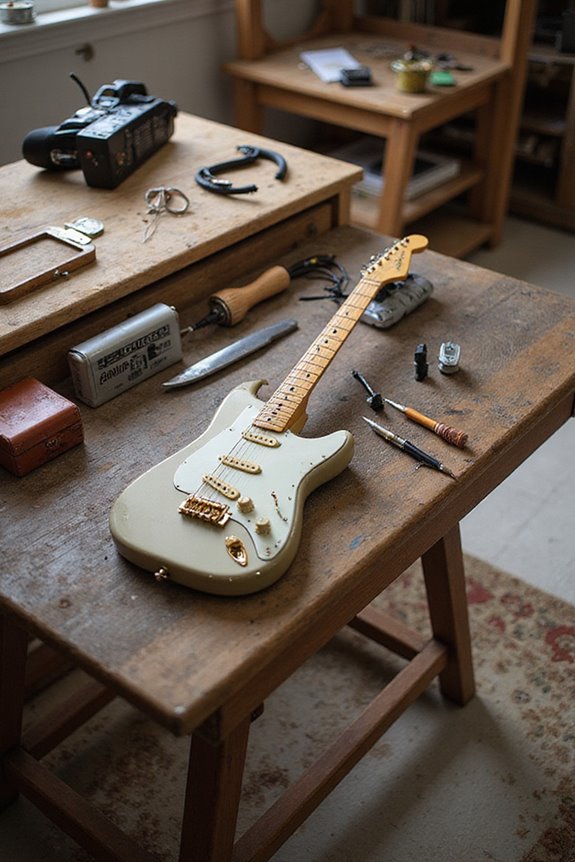
When we consider how finger size affects our guitar playing experience, we inevitably find ourselves looking at various accessories that can enhance our performance. For example, nut widths tailored to our finger thickness can improve string spacing and help avoid unintentional muting. If we have thicker fingers, a wider nut may be preferable, while smaller hands might benefit from a narrower nut that accommodates quick changes. Adjustable capos can also assist by offering flexible string spacing, making it easier to avoid fret buzz. Furthermore, incorporating finger exercisers into our practice can greatly improve finger flexibility, ultimately boosting our confidence and playability. With the right accessories, we can fully embrace our unique finger sizes and enjoy a more rewarding guitar journey. Additionally, investing in weather-resistant enclosures for our outdoor setups can ensure that our gear remains protected while we play.
Recommended Products

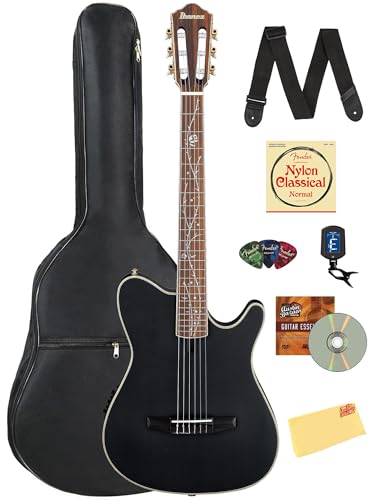
SOLID SITKA SPRUCE TOP & SAPELE BACK/SIDES: The Ibanez Tim Henson guitar features a Solid Sitka Spruce top and Sapele back/sides, delivering a balanced tone with bright highs, tight mids, and a full low end for versatile acoustic sound

Solid red cedar top Rosewood back & sides Gloss finish Honduras cedar neck Rosewood fingerboard, bridge & headstock overlay Bone nut and saddle Wood binding & rosette Gold machines with pearl buttons650mm scale length52mm neck width at nutRC Strings Kremona branded gig bag
Practical Tips for Measuring Hand Size
To accurately assess our hand size for choosing the right guitar, we can follow a few simple yet effective measurement techniques. First, let’s measure our hand span by placing a ruler flat and spreading our fingers as wide as possible. This gives us a baseline in millimeters or inches. Next, we can measure hand length from the wrist to the middle finger by laying our palm flat and checking from the wrist crease. For alternative measurement techniques, tracing our hand’s outline or photographing it next to a known-size object can also provide useful comparisons. By utilizing these methods, we’ll have a clearer understanding of our hand size, helping us find that perfect guitar fit.
Recommended Products
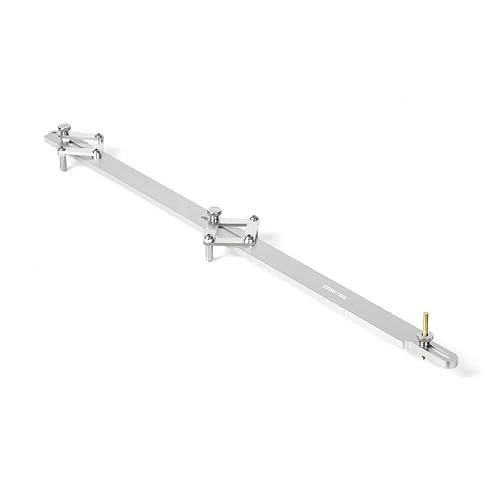
【Precision Alignment】Ensures the neck is perfectly aligned with the instrument's centerline, delivering professional-grade accuracy every time
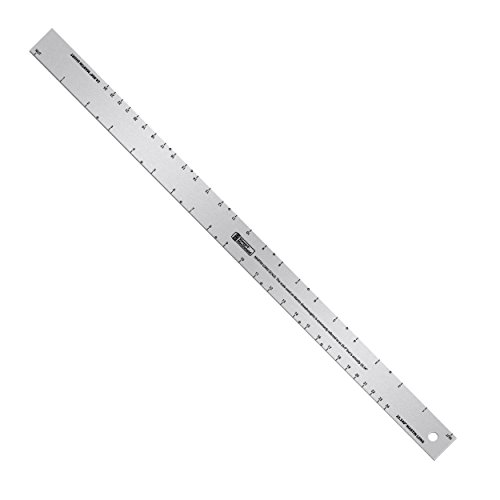
Determine fret spacings and layout fretboards accurately

WRENCH SET: Perfect for quickly creating straight and accurate thread holes in your workpieces. It works with small hand reamers, drill bits, and other hand-turned tools. Includes 161R for No. 0 to 1/4" taps and the 162R for No. 12 to 1/2" taps.
Finding the Right Guitar for Different Hand Sizes
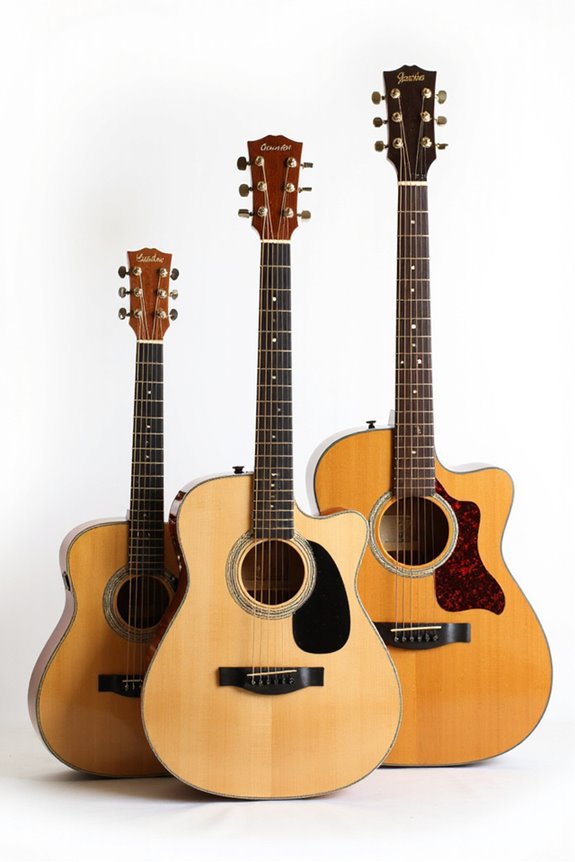
How can we guarantee that our guitar choice complements our hand size? By understanding how hand span correlates with various guitar types and playing styles, we can make informed decisions. For larger hands with a span over 250mm, a longer scale length of around 664mm suits us best. If we have a medium span, guitars ranging from 650mm to 656mm are common, perfect for electric and classical styles. Smaller hands benefit from shorter scale lengths—around 630mm—to reduce finger strain. Furthermore, opting for guitars with narrower neck widths can enhance playability for smaller hands while giving larger hands more room for fingerstyle techniques. Ultimately, matching our hand size to the right guitar guarantees comfort and enjoyment while playing.
Recommended Products

Solid Engelmann Spruce Top, Solid East Indian Rosewood Sides, Solid East Indian Rosewood Back
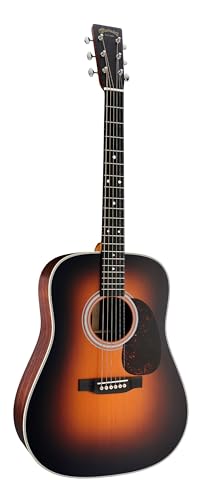
DREADNOUGHT BODY SIZE: The Martin Dreadnought is one of the most iconic acoustic guitar shapes, known for its bold, room-filling sound. Invented by Martin in 1916, this larger-bodied shape delivers strong bass, rich sustain, and excellent projection, making it perfect for strumming, fingerpicking, and any genre of music. Whether you're playing solo or in a band, the Dreadnought's warm, balanced tone ensures your sound stands out.

DREADNOUGHT BODY SIZE: The Martin Dreadnought is one of the most iconic acoustic guitar shapes, known for its bold, room-filling sound. Invented by Martin in 1916, this larger-bodied shape delivers strong bass, rich sustain, and excellent projection, making it perfect for strumming, fingerpicking, and any genre of music. Whether you're playing solo or in a band, the Dreadnought's warm, balanced tone ensures your sound stands out.
Frequently Asked Questions
How Does Hand Size Affect Finger Position While Playing?
When we think about how hand size affects finger position, it’s clear that finger flexibility and chord reach play critical roles. We can adapt our techniques, ensuring comfort and ease while playing no matter our hand size.
Can Hand Size Impact Strumming Techniques on Guitar?
Our hand size influences strumming styles and grip techniques. By understanding and adapting our approach, we can enhance our comfort and sound, making playing together more enjoyable and rewarding for everyone involved.
What Accessories Are Best for Smaller Hands?
We understand smaller hands can face challenges, but the right accessories can transform our play. Lightweight guitar picks and effective finger exercises enhance our grip and dexterity, making our musical journey more enjoyable and accessible together.
Is There a Specific Type of Guitar for Young Players?
We’ve found that child-friendly guitars come in various youth guitar sizes, perfect for our little ones. Choosing the right size guarantees they feel comfortable and excited to play, making the learning experience enjoyable together.
How Often Should I Reassess My Guitar Fit as I Grow?
Have we ever felt restricted by an uncomfortable guitar? As we grow, we should reassess our guitar fit every 6 to 12 months, making hand adjustments to guarantee our journey remains enjoyable and free from strain.