As an Amazon Associate, we earn from qualifying purchases. Some links on this site are affiliate links at no extra cost to you. Our recommendations are based on thorough research and editorial judgment.

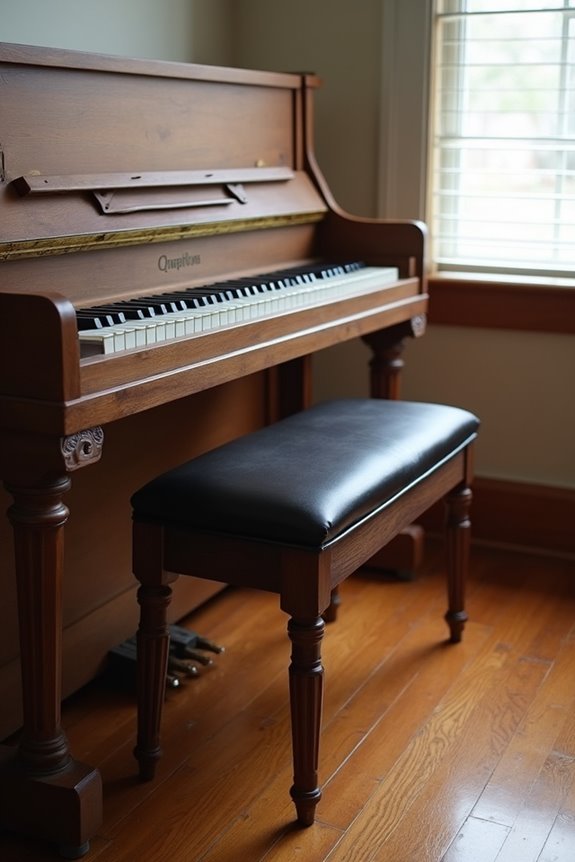
How To Choose A Piano Bench For Proper Posture?

Choosing the right piano bench is key to maintaining proper posture during practice. First, we should adjust the bench height so it’s between 18 to 22 inches, keeping elbows level with the keyboard. Next, make certain our feet rest flat on the floor for stability, and the bench is centered with the keyboard. This prevents slouching and promotes alignment. Finally, let’s check our hand and arm positions regularly for comfort and control. More tips await as we explore further!
Key Takeaways
- Select a bench height between 18 to 22 inches to maintain proper posture and comfort while playing.
- Ensure feet rest flat on the floor to provide a stable base and reduce fatigue during practice.
- Position the bench to center with the keyboard, allowing elbows to remain close without feeling cramped.
- Adjust the bench depth to sit toward the front half, promoting free arm movement and better body alignment.
- Check hand and arm posture regularly, ensuring wrists are elevated and fingers curve naturally while pressing keys.
Importance of Proper Seat Positioning
You may be interested

When we sit down at the piano, the way we position ourselves can greatly impact our playing experience and efficiency. Ensuring proper seat depth is essential; we should sit toward the front half of the bench to promote free arm movement. This positioning helps keep our body alignment in check, allowing our necks and spines to maintain a stable posture.
Also, our feet must rest flat on the floor, creating a stable base. By centering our weight on the buttocks, we achieve balance and reduce unnecessary tension in our back and shoulders. Proper seat positioning enhances our control and encourages longer playing sessions without fatigue, ultimately fostering a more enjoyable and productive experience at the piano. Additionally, having the right equipment can further enhance your overall comfort and performance while playing.
Adjusting the Bench Height
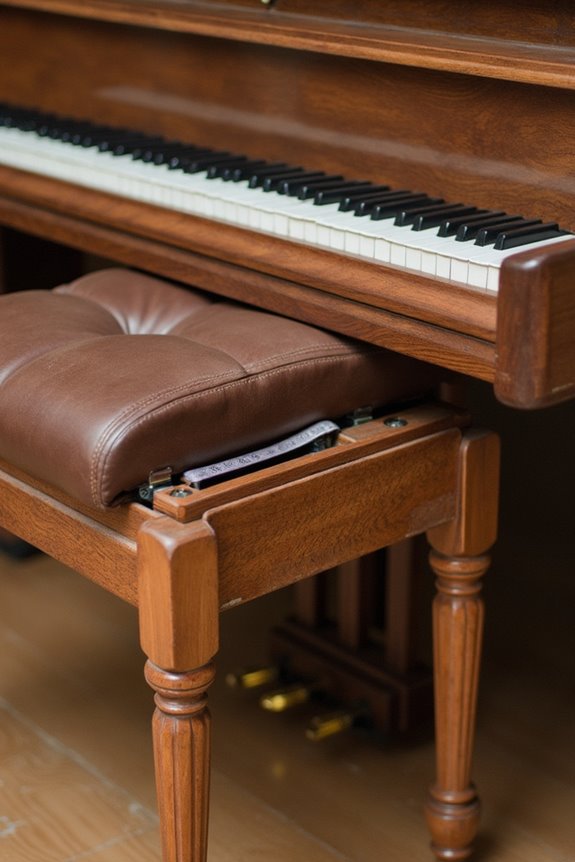
How can we guarantee our bench height is just right for ideal playing? Typically, we want our bench height to fall between 18 and 22 inches for comfort and technique. Using adjustment techniques, like side knobs on adjustable benches, allows us to fine-tune the height while seated, ensuring our arms remain parallel to the floor. If we find ourselves playing on a fixed bench, we can safely use stable objects like books to elevate it. Remember, a bench too low can lead to slouching, while one that’s too high may raise our shoulders unnaturally. Regularly reassessing our bench height lets us maintain proper posture, supporting our playing style and comfort throughout practice sessions. Additionally, maintaining optimal sound quality can enhance our overall playing experience.
Recommended Products

YOUR ORGAN COMES ALIVE WITH VINTAGE ROTARY SIMULATION: The 122 Rotary Speaker simulation delivers Slow, Fast, and Stop modes with Drive control for authentic warmth and movement in every live performance

Rich expression from Roland’s SuperNATURAL Piano technology

INCLUDED - Roland F701 Digital Piano (Light Oak), Stand, Bench, Headphone Hook, Power Adapter, Manual, Roland Warranty, & Studio Monitor Headphones.
Correct Foot Placement for Stability

Achieving proper foot placement is essential for ensuring stability while playing the piano. We should keep our feet flat on the floor for ideal foot stability. If our feet don’t reach the ground, using a footstool or pedal extender is a great solution. This keeps our weight evenly distributed and promotes an active seating position.
It’s also important to relax our feet, distributing equal pressure to avoid tension. Our legs should align naturally, with knees over ankles, supporting better circulation. By positioning our feet comfortably near the pedals, we enhance our pedal technique, allowing for smooth, controlled movements. Remember, proper foot placement helps us maintain good posture and prevents discomfort during long practice sessions. Additionally, maintaining proper posture is crucial for long-term playing comfort and performance.
Recommended Products
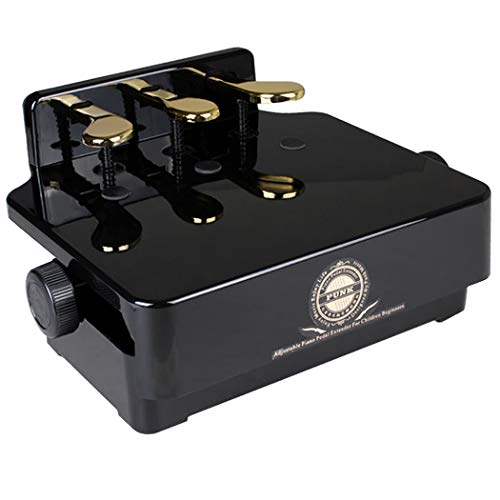
Helps Young Pianists Reach The Piano Pedals - This Piano Pedal Extenders can help children develop the correct habit of playing the piano. Let your child easily touch the piano pedals and Say goodbye to bad habits such as bad sitting posture, weak fingers and hunchback.

New design and new material of ABS. Lightweight but Portable

Adjustable Height - From 5.5’’ to 8.7’’/14cm-22cm.With multiple adjustment levels, you can easily set the ideal height to support healthy, comfortable posture during every learning session
Bench Position Relative to the Keyboard

Sitting with the right bench position relative to the keyboard can profoundly impact our playing experience. First, let’s focus on bench centering; we need to guarantee our bench is perfectly aligned with the keyboard’s width for symmetry. Sitting squarely will promote balanced movements, enhancing control.
The ideal distance from the keyboard is also vital—we should find that sweet spot where our elbows are close without feeling cramped. Personal experimentation helps us discover what works best for us. By adjusting our bench height, we can keep our elbows almost level with the keyboard, avoiding strain. Let’s remember, comfort and technique go hand in hand, leading us towards more fluid and enjoyable playing sessions! Additionally, ensuring that our bench allows for proper posture can significantly enhance our overall playing experience.
Recommended Products

Roland F701 – Winner of Red Dot Design Award: Product Design 2021
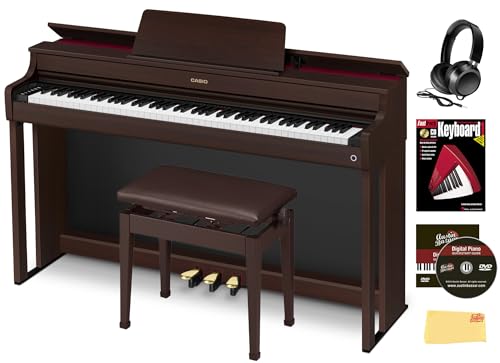
SOUND & TECHNOLOGY: The Casio Digital Piano features the Multi-Dimensional Morphing AiR Sound Source, delivering rich grand piano tones with enhanced authenticity through String Resonance and Lossless Audio Compression

SLIM AND DISTINCTIVE DESIGN FOR ANY SPACE: The world's slimmest 88-key digital piano with hammer action. With a depth of just 232 mm, it fits in your living room, bedroom or elsewhere for a living space filled with music, flat, mirror-like top panel with touch controls offer a sophisticated look. The striking gold logo on the surface of the body adds an extra touch of elegance.
Maintaining Hand and Arm Posture

While we often focus on bench height and keyboard position, the way we hold our hands and arms plays a crucial role in our playing comfort and technique. To maintain proper hand flexibility, we should keep our wrists slightly elevated, preventing any wrist dipping. Imagine a bubble under our hands to support buoyancy. For finger curvature, let’s naturally curve our fingers, as if cradling a small ball, ensuring we use our fingertips to press the keys. Arms should hang naturally from our shoulders, avoiding tension as we keep our elbows slightly elevated. Regularly checking our posture and using tactile cues, like holding objects in our mind, helps reinforce these principles, enhancing our dexterity and control while playing. Additionally, maintaining proper impedance compatibility between your amplifier and speakers can also contribute to better overall audio experience while practicing.
Tips for Injury Prevention and Comfort
When it comes to preventing injuries and ensuring comfort at the piano, selecting the right bench is just as important as mastering your technique. We should prioritize benches with adjustable height to align our forearms and wrists properly, promoting neutral posture. The cushion quality also matters—adequate padding can relieve pressure points, allowing us to play longer without discomfort.
Choosing benches made from sturdy materials enhances stability, which minimizes the risk of unexpected movements that could disrupt our technique. It’s also essential to find a bench that offers a comfortable seating surface, preventing awkward positions that might lead to strain. Together, these choices foster an inviting practice environment where we can thrive without discomfort.
Recommended Products

Silent, Smooth & Continuous Adjustment - No Rocking!

Gas Pneumatic Mechanims with Steel Legs Covered with Solid Wood
Silent, Smooth & Continuous Adjustment - No Rocking!
Frequently Asked Questions
What Type of Material Should a Piano Bench Be Made Of?
Did you know that 70% of musicians prefer wooden benches for their durability and aesthetic? When considering a piano bench, let’s explore wood options and various padding types to guarantee comfort and style in our shared music journey.
How Much Should I Budget for a Quality Piano Bench?
When budgeting for a quality piano bench, we should consider around $200 to $1,000. With our budgeting tips, we can explore numerous quality options tailored to our needs and preferences, enhancing our musical experience together.
Are Adjustable Benches Worth the Investment for Beginners?
Are adjustable benches really worth it for beginners? Absolutely! Their adjustable features offer significant beginner benefits, ensuring comfort and proper alignment that foster growth. We’ll find lasting value in investing wisely for our musical journeys together.
Can I Use a Dining Chair Instead of a Piano Bench?
Sure, we can use a dining chair, but it might compromise our playing comfort and posture impact. While it offers some comfort, it often lacks the necessary adjustments and stability we need for ideal performance.
What Is the Best Style of Piano Bench for Classical Playing?
When considering the best style of piano bench for classical playing, we should prioritize both classical aesthetics and adjustable bench height. This way, we can enhance our posture and deepen our connection to the music we love.