As an Amazon Associate, we earn from qualifying purchases. Some links on this site are affiliate links at no extra cost to you. Our recommendations are based on thorough research and editorial judgment.


How To Prevent Damage To Sensitive Audio Equipment?

To prevent damage to sensitive audio equipment, we should focus on several key areas. First, we must implement proper power management by using devices with power-saving modes and scheduling. Also, storing equipment in secure, padded cases protects against physical impacts. Maintaining a stable environment with controlled temperature and humidity limits wear. Additionally, using robust surge protectors safeguards against electrical issues. Finally, keeping a detailed inventory guarantees we track and protect our gear effectively. Let’s explore these strategies further.
Key Takeaways
- Use padded cases and shock-absorbent covers during transport to protect against impact damage.
- Store audio equipment in dedicated, dust-resistant cases to reduce contamination and wear.
- Maintain stable temperature and humidity levels to prevent moisture damage to sensitive components.
- Implement surge protectors with high joule ratings to shield equipment from voltage spikes.
- Conduct routine inspections and audits to monitor equipment condition and address potential issues promptly.
Proper Power Management
You may be interested

When we think about protecting our sensitive audio equipment, engaging in proper power management is vital. By using devices with built-in power saving modes, like sleep or auto-shutoff, we can greatly reduce energy consumption during inactivity. Activating automated scheduling for power systems also minimizes energy waste during idle periods. Additionally, load balancing is essential; we should distribute amplifier power loads evenly across different phases to avoid overloading any single one. This way, we lower the chances of premature clipping and unwanted noise. Choosing ENERGY STAR certified equipment and optimizing display parameters can further enhance our setup while ensuring efficient energy use. Proper ventilation in AV racks helps prevent overheating too, keeping everything running smoothly. Moreover, advanced audio technologies can help minimize distortions and enhance the listening experience, ultimately preserving the integrity of the audio equipment.
Physical Protection and Handling
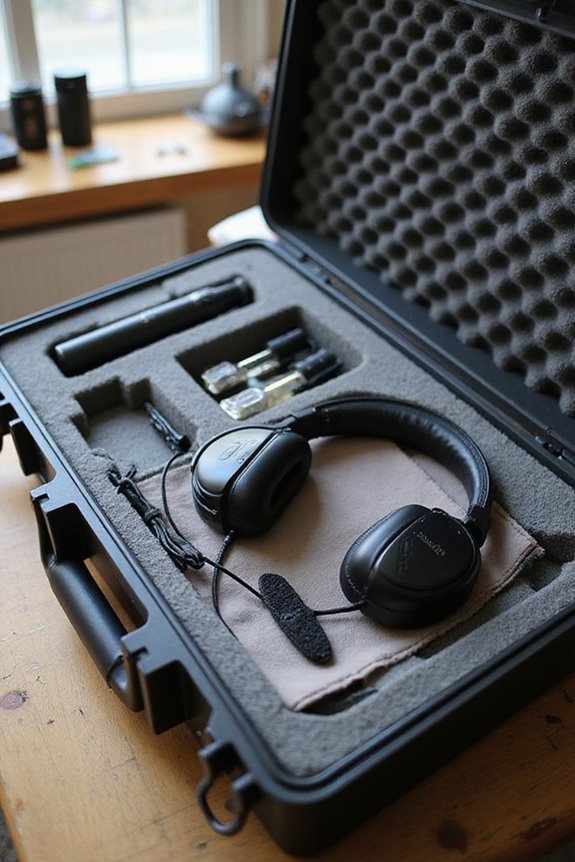
To avoid costly damage to our sensitive audio equipment, it’s crucial to adopt effective physical protection and handling practices. First, let’s invest in secure storage solutions, like dedicated lockable cabinets, to keep our gear safe from misuse. When transporting equipment, padded cases or shock-absorbent covers can minimize impact damage considerably. We should also implement protective covers against dust and dirt while using cables wisely to prevent tripping hazards. During setup and breakdown, using both hands and clean gloves helps prevent wear on sensitive components. Let’s develop a routine that incorporates these handling techniques and educate everyone involved. Regular inspections and audits can guarantee everything remains in excellent condition, preserving the quality of our audio experience for the long haul. Additionally, considering weatherproof ratings can enhance the durability of audio equipment used in outdoor environments.
Environmental Safeguards

Ensuring our audio equipment stays in peak condition goes beyond just physical protection; environmental factors play an important role in its longevity. We should maintain a stable temperature between 15°C and 25°C and control humidity between 40%-60%. This humidity control prevents corrosion and electronic failures. Using climate-controlled rooms or sealed cases with desiccant packs can help minimize moisture during transport.
In addition, dust protection is essential. Let’s invest in dust-resistant cases and routinely clean our equipment to avoid clogging. Measures like storing our gear in clean, dedicated spaces can greatly reduce the potential for damage. By adopting these precautions, we can create an environment that fosters the ultimate performance of our cherished audio gear. Additionally, ensuring proper power output from our amplifiers can prevent overheating and potential damage during operation.
Electrical Safety and Surge Protection

Electrical safety is essential for protecting our sensitive audio equipment from damaging surges and power fluctuations. To effectively safeguard our gear, we should choose surge protectors with high joule ratings—ideally over 2000 joules. This rating helps absorb excess energy before it reaches our equipment. We also want to guarantee that the clamping voltage is below 400V, which triggers protection quickly to prevent damage. Monitoring the protection status with indicator lights can keep us informed of any potential issues. Implementing layered protection, such as combining whole-home surge protection with plug-in models at individual points, enhances our defense against unexpected surges. Remember to regularly replace these surge protectors, especially after significant surges, to maintain their effectiveness. Additionally, consider amplifiers with low total harmonic distortion to ensure better sound clarity and minimize the risk of damage to audio equipment.
Inventory Management and Insurance

Managing sensitive audio equipment effectively is essential for preserving its longevity and performance. Implementing an inventory tracking system with real-time monitoring helps us stay updated on stock levels and facilitates equipment categorization. By organizing our gear into groups—like AV tools, cables, and accessories—we can simplify management and guarantee everything’s in its designated kit.
Regular audits allow us to spot discrepancies early, leading to peak equipment tracking. Coupling this with specialized insurance that covers theft and accidental damage further protects our investments. Keeping our inventory list current also aids in accurate insurance claims, assuring we’re covered whether our gear’s in storage or on the go. Together, these strategies create a solid foundation for safeguarding our sensitive audio equipment. Additionally, evaluating the warranty length and terms of our audio equipment can ensure we have the necessary protection against unforeseen damage.
Frequently Asked Questions
How Do I Clean My Audio Equipment Without Causing Damage?
To clean our audio equipment safely, let’s use gentle cleaning techniques and safe materials like 70% isopropyl alcohol. Together, we’ll protect our gear and keep it sounding great without causing any damage.
What Should I Do if My Equipment Gets Wet?
If our equipment gets wet, we need to act quickly, like a firefighter tackling flames. Turning it off prevents water damage, while moisture control involves gentle drying and avoiding buttons to protect our beloved gear together.
How Can I Optimize Sound Quality in My Setup?
To optimize sound quality, we should focus on proper speaker placement and acoustic treatment. Let’s arrange our speakers thoughtfully and consider adding bass traps to enhance clarity, creating a more immersive listening experience together.
Can Extreme Temperatures Affect Audio Equipment Performance?
As summer storms dance through our soundscapes, we’ve all felt temperature fluctuations sway our audio equipment. With humidity control, we can protect our passions, ensuring that every note resonates clearly, creating a harmony we share together.
Which Insurance Options Are Best for Audio Gear Coverage?
When considering gear protection plans, we recommend exploring specialized audio equipment insurance. These tailored policies provide essential coverage for our valuable gear, ensuring we’re protected against theft, damage, and unforeseen situations that could disrupt our work.