As an Amazon Associate, we earn from qualifying purchases. Some links on this site are affiliate links at no extra cost to you. Our recommendations are based on thorough research and editorial judgment.


How To Choose The Right Amplifier For My Speakers?

To choose the right amplifier for our speakers, we need to take into account several key factors. First, let’s check the RMS power ratings; our amplifier should match or be slightly below the speaker’s rating for peak performance. Next, we must guarantee proper impedance matching—usually 4, 6, or 8 ohms—to avoid distortion. Finally, we should review the sensitivity ratings, as higher ratings mean less power is needed for loud output. There’s more to explore in achieving the best sound quality.
Key Takeaways
- Match the amplifier’s RMS power rating with the speaker’s handling capacity to avoid distortion and ensure reliable performance.
- Consider speaker impedance and choose an amplifier that can accommodate it to optimize power transfer and sound quality.
- Look for speakers with high sensitivity ratings, as they require less power to achieve the same loudness compared to those with lower ratings.
- Evaluate amplifier features such as built-in DACs and EQ settings to enhance audio quality and customization.
- Regularly check and maintain your audio equipment to ensure long-lasting performance and sound quality.
Understanding RMS Power Ratings
You may be interested


When it comes to audio systems, grasping the concept of RMS (Root Mean Square) power ratings is essential for ensuring a harmonious match between your amplifier and speakers. Many of us fall into RMS misconceptions, mistaking peak power for consistent output. RMS measurement techniques provide a clearer view by indicating the continuous power that our equipment can handle without distortion.
For instance, if our amplifier outputs 100 watts RMS, and our speakers handle 90 watts RMS, we’re in a safe zone. This prevents overloading and achieves clean sound quality. Understanding RMS helps us select components that work seamlessly together, enhancing our listening experience and ensuring long-term reliability for our audio setups. Additionally, it’s important to consider impedance compatibility to avoid damage and improve performance in your audio system. Let’s embrace this knowledge for better sound!
Recommended Products

The best of both worlds is provided in terms of sound quality. Warm and smooth tube sound combines with transistor dynamics and power.

9” WXGA High-Resolution Anti-Glare Display (1280x720px)

Massive 16-inch Ultra driver with unprecedented 8-inch edge wound voice coil ensures astonishing output and low frequency extension with pinpoint accuracy and speed in transients.
Importance of Impedance Matching

Understanding the importance of impedance matching is essential for achieving the best performance from our audio systems. By guaranteeing the impedance levels of our speakers align with our amplifier’s output impedance, we optimize power transfer and sound quality. Using matching techniques helps avoid distortion, which occurs when mismatched impedance forces an amplifier to struggle, leading to an unpleasant listening experience.
For example, connecting an 8-ohm speaker to a 4-ohm rated amplifier can lead to lower volume and reduced fidelity. Furthermore, mismatches can stress equipment, potentially shortening its lifespan. So, let’s take the time to guarantee our gear is compatible—proper impedance matching enhances dynamic range, clarity, and overall enjoyment of our favorite tunes. Additionally, high signal-to-noise ratio is crucial for minimizing background noise and ensuring a clear listening experience.
Recommended Products

The A1 is built around a completely discrete and symmetrical Class A topology. It‘s able to output 25W of pure Class A power @ 8 ohms load with 25A of maximum output. While the numbers here might seem rather low, the ability for the output stage to drive difficult speakers is a small miracle in itself. The amp design being dynamic class A, and if Class A standing current is exceeded, it will automatically allow more. It therefore “slides” (NOT “switches”) smoothly into class B style operation.

The model currently on sale is the New Model upgraded in December 2023.
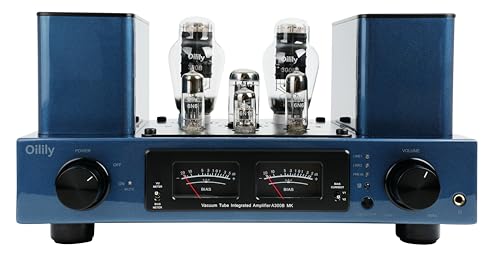
Premium Tube Configuration: The amplifier features a superior tube architecture incorporating a pair of 300B tubes and a 5AR4 rectifier tube, ensuring high-fidelity and meticulous reproduction of audio signals. The voltage amplification stage employs 6N11 and 6N6 tubes, delivering efficient audio amplification and outstanding dynamic performance.
Sensitivity Ratings Explained

In our quest for audio perfection, speaker sensitivity ratings play a pivotal role in shaping our listening experience. These ratings represent how efficiently a speaker converts electrical power into sound, measured in decibels (dB). Using sensitivity measurement techniques, we can assess a speaker’s efficiency by playing a 1-watt audio signal and measuring the sound pressure level at a meter’s distance. For instance, a speaker rated at 110 dB requires considerably less power than one rated at 90 dB to achieve the same loudness. Understanding this speaker efficiency comparison helps us choose the right amplifier, ensuring peak performance and preventing distortion. For smooth sound in multi-speaker setups, keeping sensitivity differences to a minimum creates a cohesive audio environment. Additionally, selecting amplifiers with a recommended power rating ensures compatibility with your speakers’ efficiency, enhancing overall audio performance.
Achieving Sound Quality and Synergy
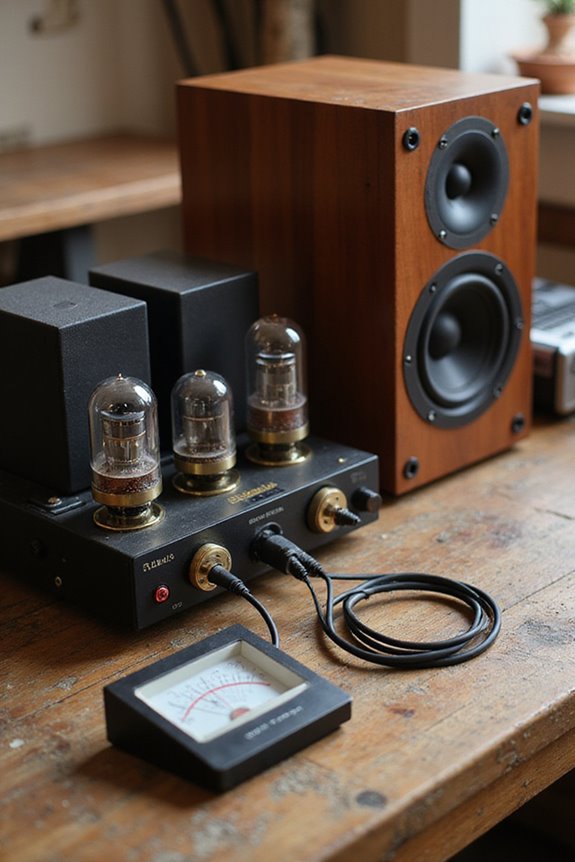
Achieving sound quality and synergy isn’t just about picking high-end components; it’s about how well they work together. We need to take into account amplifier output impedance in relation to our speakers’ design. Low output impedance amplifiers guarantee a flatter frequency response, minimizing sound coloration. For example, an amplifier with 0.01 Ω output impedance will deliver clearer sound than one at 0.5 Ω, which might introduce warmth or tonal shifts. To achieve true synergy, we should match amplifier characteristics with our speakers’ impedance curves. This guarantees balanced sound, reducing listener fatigue. By selecting compatible components, we can greatly enhance our listening experience, creating a harmonious performance that surpasses individual specifications. Additionally, ensuring Bluetooth compatibility for seamless device connection can further elevate our sound experience. Let’s focus on those perfect partnerships!
Recommended Products

HIGH-QUALITY SOUND: The REV 10 tower speaker is designed to deliver high-quality, full range sound on and off axis at long distances while riding. It has a frequency response of 20Hz - 20kHzHz and can handle up to 300 watts RMS power.

A CPLD paired with a precision clock optimizes the digital signal and performs dual-stage purification, achieving deep jitter suppression and reducing artifacts to near zero for clearer, more defined vocals and instruments

ENJOY MASTERFUL AUDIO PERFORMANCE EVEN AT THIS PRICE POINT – Divided circuitry in this home stereo amplifier allows you to disengage digital circuits, turning off Bluetooth for an undivided analog experience
Safety Features to Look For

What safety features should we keep an eye out for when choosing an amplifier? First, thermal protection is essential; it helps prevent overheating by automatically powering down the amplifier when temperatures get too high. Current protection is equally important, as it prevents damage from excessive current flow caused by shorts or abnormal speaker loads. Voltage safeguards protect against power surges and dips, which can greatly extend our amplifier’s lifespan. We also want to look for speaker protection features; they protect our speakers from potential damage caused by DC current or impedance mismatches. Finally, operational safety measures, like startup diagnostics, help make certain everything’s running smoothly before we fully power up our system. Together, these safety features create a more reliable and enjoyable listening experience. Additionally, selecting amplifiers with high power output ensures that they can deliver robust performance while maintaining safety standards.
Practical Setup and Configuration Tips
Setting up our amplifier correctly is just as important as choosing one with the right safety features. First, let’s focus on amplifier placement. We should position the amplifier on a sturdy shelf, ideally at ear level to enhance sound dispersion. Remember to leave a few inches of clearance around the unit for ventilation, preventing overheating during our listening sessions.
Next, let’s tackle wiring management. Using high-quality cables minimizes signal loss, and securing our wiring keeps everything organized. It’s essential to maintain consistent polarity when connecting wires—positive to positive and negative to negative. Labeling connections also aids in troubleshooting down the road. By following these tips, we’re setting ourselves up for an ideal audio experience that we can all enjoy together.
Recommended Products

Perforated Steel Door panels allow speaker sound and remote control signals to pass through while also ventilating your components
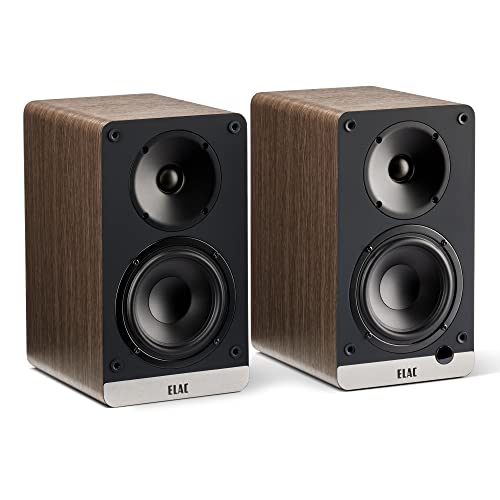
2 x 50 Watt Amplifier
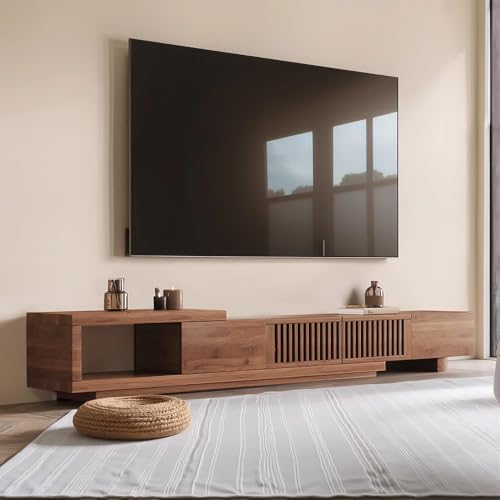
Mid-Century Modern Design: This long TV stand features a mid-century modern aesthetic with a walnut wood grain finish and slat doors on the cabinet doors, providing a stylish and timeless look that complements any vintage home decor
Calculating Power Needs for Your Space
Calculating the power needs for our audio setup is essential to guarantee ideal sound quality throughout our space. First, we need to evaluate room acoustics and listener positioning, as these factors greatly influence sound dispersion and clarity. If we’re targeting an average sound pressure level (SPL) of around 100 dB, we should take into account the sensitivity of our speakers. For instance, higher sensitivity speakers (like 105 dB-SPL) need less power to achieve the desired SPL. As we calculate the required amplifier power, we shouldn’t forget about headroom; peaks can be much louder. So, when dealing with larger rooms, we might need an amplifier that offers considerably more power, ensuring that every corner of our space feels the music.
Recommended Products

Fully balanced circuitry to deliver impressively low signal-to-noise ratio and improved channel separation

Fully balanced circuitry to deliver impressively low signal-to-noise ratio and improved channel separation

This receiver requires a ULXD transmitter to complete the system. Note: When purchasing separate wireless components, please match their frequency bands to ensure proper system operation.
Common Mistakes to Avoid
Are we really paying attention to the common pitfalls when selecting an amplifier for our speakers? One major mistake is mismatched impedance. If our amplifier doesn’t align with our speaker’s impedance rating, we risk sound quality drops and potential damage. We should also consider speaker efficiency; low-sensitivity speakers need more power, and underpowering them can lead to distortion. Choosing an amp that matches or slightly exceeds the speaker’s power handling is essential to maximize their performance and longevity. Plus, overlooking the amplifier’s features—like impedance matching—can limit our system’s scalability. Let’s make certain we wire everything correctly too; incorrect setups can lead to phase cancellation and damage. Paying attention to these details will guarantee we truly enjoy our audio experience.
Testing and Fine-Tuning Your Setup
Once we’ve navigated the common mistakes in amplifier selection, the next step is tuning our setup for peak performance. To achieve ideal speaker calibration, we can start by playing sine wave test tones tailored to our speakers’ frequency ranges, which helps us identify distortion or clipping. Using measurement microphones or real-time analyzers lets us pinpoint areas needing acoustic adjustments. Remember, turning off all EQ settings initially creates a clear baseline. Gradually, we can make small adjustments, ensuring balance across frequencies. Finally, let’s play familiar tracks, considering listener feedback as we fine-tune our settings. Regularly checking our system’s performance guarantees we maintain that incredible sound quality we all cherish in our music experience.
Frequently Asked Questions
Can I Mix Different Speaker Brands With One Amplifier?
We often hear that mixing speaker brands isn’t advisable, but as long as we guarantee speaker compatibility and respect technical specs, brand synergy isn’t a must. Let’s explore creating our ideal audio setup together!
How Do I Know if My Amplifier Is Too Powerful?
We can tell if our amplifier’s too powerful by checking amplifier ratings against our speakers’ efficiency. Distorted sound or overheating signals a mismatch, reminding us to stay within safe levels for a better listening experience together.
What Happens if I Connect Mismatched Speaker Impedance?
If we connect speakers with impedance mismatch, we’re flirting with disaster! It could lead to speaker damage and even amplifier failure. Let’s stick together and guarantee we match impedance for peak sound and longevity.
How Often Should I Check My Amplifier and Speakers?
We should check our amplifiers and speakers regularly to guarantee peak performance and speaker longevity. Annual maintenance for amplifiers and biannual inspections for speakers keep everything running smoothly. Together, let’s protect our audio investments!
Can Speaker Placement Affect Amplifier Performance?
Imagine our sound dancing through the room! Yes, speaker placement dramatically influences amplifier performance. We must consider speaker distance, acoustic environment, room dynamics, and orientation for a harmonious listening experience where every note embraces us.