As an Amazon Associate, we earn from qualifying purchases. Some links on this site are affiliate links at no extra cost to you. Our recommendations are based on thorough research and editorial judgment.

What Are The Differences Between Mono And Stereo Amplifiers?

When we look at mono and stereo amplifiers, we see distinct differences in their purposes and applications. Mono amplifiers deliver a single output channel, providing clarity and simplicity, which is great for public address systems or subwoofers. In contrast, stereo amplifiers offer dual-channel output, enhancing sound quality and creating an immersive experience for music and home theaters. This complexity gives stereo setups richer audio with instrument separation. Keep exploring for deeper insights on choosing the right amplifier for your needs.
Key Takeaways
- Mono amplifiers output a single channel, while stereo amplifiers provide two separate channels for richer sound experiences.
- Mono amplifiers have simpler circuitry and reduced noise interference compared to the complexity of stereo amplifiers.
- Stereo amplifiers excel in applications like home entertainment, offering spatial effects and instrument placement appreciation.
- Mono amplifiers are ideal for live sound and subwoofer setups, ensuring clarity and consistent audio across zones.
- Stereo amplifiers share components, making them more compact and cost-effective compared to the dedicated designs of mono amplifiers.
Channel Configuration Differences
You may be interested


When we’re diving into the differences between mono and stereo amplifiers, channel configuration is the first aspect that stands out. Mono amplifiers offer a single channel output, perfect for driving just one speaker or a subwoofer, while stereo amplifiers deliver two separate outputs for left and right channels. This allows us to enjoy rich stereo effects that create an immersive sound field. With stereo, we can feel the music moving around us, thanks to distinct audio cues from each channel. Mono is simpler and often used in scenarios like PA systems, while stereo configurations shine in music playback or home theaters, enhancing our overall listening experience. Understanding these differences helps us choose the right setup for our needs. Additionally, many modern guitar amps feature built-in effects that further enhance the audio experience.
Recommended Products

TRUE RACK DENSITY - Power points of 300W or 600W in 2-/4-/8-channel configurations - all in a 2 Rack Unit form factor. More channels in one box allow smaller infrastructure rooms that can reduce operational costs while giving you the utmost in installation flexibility.

HOME THEATER RECEIVER - Denon's AVR-A10H AV Receiver (150W X 13) powers up to 13 speakers & 4 independent subwoofers as a home audio amplifier; has immersive audio with Dolby Atmos, DTS:X Pro & more along with stunning 8K visuals for movies & games

48 Input Channels, 36 Total Busses, PAFL Bus, 12 Stereo Mix (Aux or Group) + Main
Signal Processing and Interference

Although both mono and stereo amplifiers serve similar purposes, their signal processing and potential for interference set them apart considerably. Mono amplifiers feature a simplified signal path, processing a single audio channel with fewer components, which enhances noise handling and lowers the risk of crosstalk issues. In contrast, stereo amplifiers manage two separate channels, increasing complexity and susceptibility to interference. This can lead to phase alignment challenges, where timing differences between channels complicate sound clarity and directionality. Proper design and shielding in stereo amps are essential for minimizing these risks, ensuring each channel remains distinct. For audiophiles, understanding these differences helps in choosing the right setup for an ideal listening experience tailored to their preferences. Additionally, selecting amplifiers with low total harmonic distortion can significantly improve overall sound clarity in stereo setups.
Recommended Products

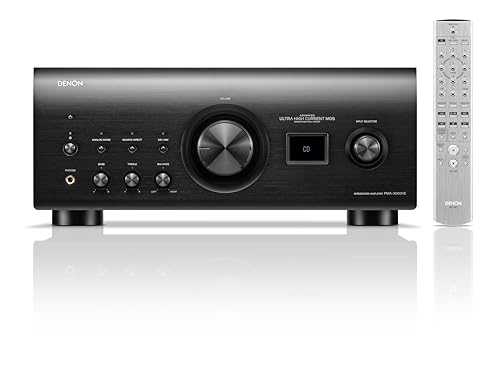
HIGH-PERFORMANCE INTEGRATED AMPLIFIER - The Denon PMA-3000NE 2 Channel Amplifier Home Audio, tuned by Denon's Sound Master Shinichi Yamauchi, delivers 80W/Ch at 8 ohms (160W/Ch at 4 ohms), ensuring accuracy & low distortion to enhance your home audio

Sound Quality and Listening Experience

For instance, when we listen to a complex orchestral piece, stereo allows us to appreciate each instrument’s unique placement in the mix. Conversely, mono sound flattens this experience, merging everything into a single point. Ultimately, choosing stereo enriches our listening adventure, particularly for music and media designed to showcase spatial effects. Additionally, soundbars that feature multi-directional audio can further enhance this experience by creating a surround sound effect.
Recommended Products

LOWEST EVER, WHILE SUPPLIES LAST @ $999 (save $900). Meet the Dolby Atmos soundbar trusted by thousands of verified owners. Built on 70+ years of audio expertise, it delivers lifelike 360° surround and deep room filling bass. Next level plug and play performance made simple.

UNLEASH THE FULL POTENTIAL OF SURROUND SOUND: Hear cinema-style surround sound all around you with 360 Spatial Sound Mapping.

Feel sound like never before with a pair of breakthrough speakers designed from the inside out for a next-level spatial audio experience.
Application and Usage Scenarios

In today’s diverse audio landscape, understanding the application and usage scenarios of mono and stereo amplifiers can greatly enhance our sound experience.
Stereo amplifiers shine in home entertainment systems, where they deliver rich audio for music and dialogue by providing channel separation. You might find them in multi-room setups where spatial effects elevate our enjoyment. On the flip side, mono amplifiers excel in car audio systems, especially for powering subwoofers for that deep bass we crave. In professional environments like live sound, mono amplifiers guarantee precise amplification across numerous channels, maintaining clarity. For commercial spaces, mono setups simplify wiring and deliver consistent audio across multiple zones, proving beneficial in venues focused on speech clarity. Each amplifier type has its place in our audio journeys. Additionally, the importance of audio quality in selecting the right amplifier can significantly influence the overall sound experience.
Recommended Products

?Hooligan SPL Series competition amplifiers. Engineered in the US, manufactured in South Korea, and Independently Tested vs. Competing amplifiers. Use To Power The Best Subwoofers In The Market.
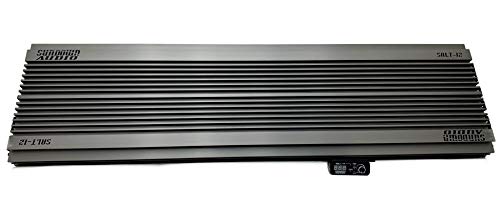

Full Power Handling: 1200 Watts
Equipment Complexity and Cost
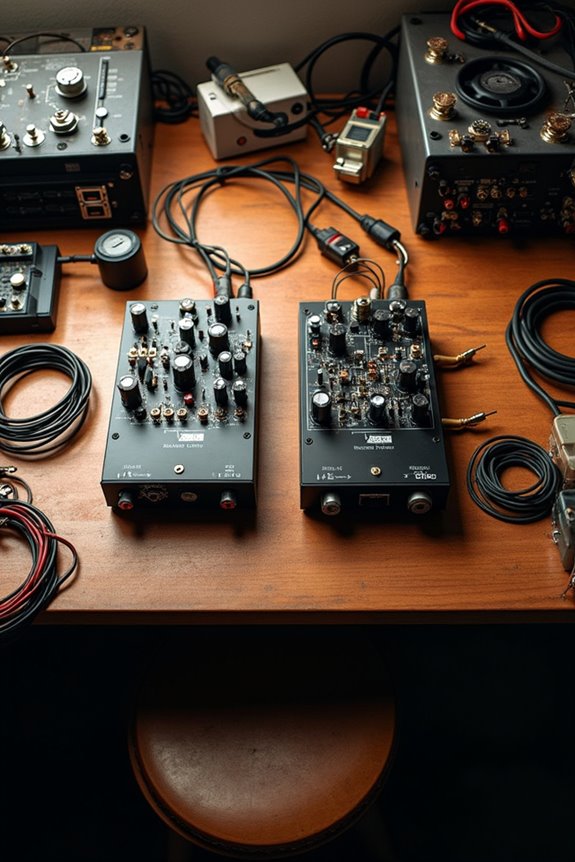
Understanding the differences in equipment complexity and cost between mono and stereo amplifiers can greatly impact our audio choices. Mono amplifiers typically incorporate dedicated circuitry and independent power supplies, leading to higher pricing strategies per channel. They’re often larger due to their fully balanced designs, offering superior channel separation. In contrast, stereo amplifiers pack two channels in one housing, sharing components, which makes them more compact and budget-friendly.
For typical consumer setups, stereo amps simplify wiring and installation. However, for high-end audio systems, the extra investment in mono amplifiers may be worthwhile due to their electrical isolation and potential reliability. This investment can enhance sound quality by ensuring that each channel operates independently without interference. Ultimately, our choice boils down to our specific needs, preferences, and willingness to navigate these design considerations.
Recommended Products

Premium, powerful, stereo/mono power amplifier, Selectable high/low gain to match any preamplifier

Power: A true 200-watt experience. Unlike most amplifiers or receivers, the Monolith's 200 watts per channel rating is measured with all seven channels driven across the full power bandwidth of 20Hz to 20kHz into 8-ohm loads.
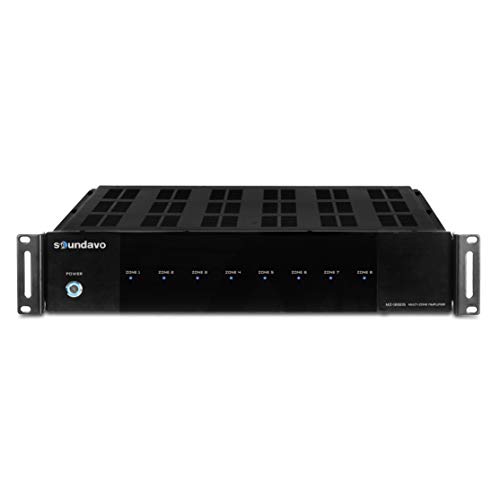
【Multi-Room Flexibility and Plenty of Power 】True multi-room workhorse that performs well with in-ceiling, indoor or outdoor speakers, the MZA-12 amplifier rated at 50 watts per channel into 8 ohms and 80 watts per channel into 4 ohms. With the Stereo/Bridge switch in the Bridge mode, each zone of channels are combined for a higher powered mono output of 160 watts into 8 ohms when needed.
Frequently Asked Questions
Can I Use Mono Amplifiers for Stereo Speakers?
Absolutely, we can use mono amplifiers for stereo speakers, but we need proper speaker configuration. Ensuring mono compatibility and wiring our setup correctly gives us enhanced clarity and better sound separation for a truly immersive audio experience.
How Does Impedance Affect Mono and Stereo Amplifiers?
Did you know that a 4-ohm speaker can draw twice the current of an 8-ohm? Proper impedance matching is essential for ideal amplifier performance, ensuring our audio system sounds its best without risking damage.
What Are the Size Differences Between Mono and Stereo Amplifiers?
When we explore amplifier dimensions, we see mono amps often require more space due to separate units, while stereo amps combine channels, making them generally lighter and more portable. Together, we can choose what fits our needs!
Do Mono Amplifiers Consume More Power Than Stereo Amplifiers?
Think of our audio journey like a dance—often, it’s not just the number of partners, but their grace. In this case, amplifier efficiency shapes power consumption, meaning it’s not always clear-cut which consumes more.
Are There Hybrid Models That Combine Mono and Stereo Features?
Absolutely, hybrid designs truly showcase amplifier versatility. They allow us to enjoy both mono and stereo features seamlessly, optimizing our audio experience without cluttering our space. It’s the best of both worlds for all of us!