As an Amazon Associate, we earn from qualifying purchases. Some links on this site are affiliate links at no extra cost to you. Our recommendations are based on thorough research and editorial judgment.


How To Choose An Amplifier For Bookshelf Speaker Setup?

Choosing the right amplifier for our bookshelf speaker setup starts with understanding impedance matching and power handling. We should aim for an amp that delivers between 30 to 60 watts per channel and matches our speakers’ 8Ω impedance. Sensitivity matters too; speakers rated at 90 dB require less power for the same volume compared to 85 dB models. Integrating features like streaming and ensuring quality connectivity will enhance our experience. Keep going to uncover more essential tips and nuanced details.
Key Takeaways
- Match the speaker’s nominal impedance (usually 8Ω) with the amplifier’s impedance range to ensure compatibility and optimal performance.
- Choose an amplifier with power ratings that meet or exceed the speakers’ RMS (30-60 watts per channel) to support dynamic sound peaks.
- Consider the speaker’s sensitivity rating, as higher sensitivity (90 dB or above) requires less power for the same volume level.
- Look for connectivity options (RCA, binding posts) that match your devices, ensuring the amplifier can handle the speaker’s power requirements.
- Assess integrated amplifiers with streaming capabilities for a modern setup; prioritize durability and potential for future tech upgrades.
Understanding Impedance Matching
You may be interested


When we talk about choosing the right amplifier for our bookshelf speakers, understanding impedance matching is crucial. Impedance basics tell us that a speaker’s impedance, measured in ohms (Ω), influences how much current it draws from the amplifier. Most bookshelf speakers have a nominal impedance of around 8Ω, making them compatible with many amplifiers. If we select speakers with a lower impedance, like 4Ω, we may experience higher power draw, which can strain our amplifier, risking overheating or distortion. To avoid these issues, we should verify our speakers match the amplifier’s impedance range, ideally sticking to that 8Ω mark. This not only optimizes sound clarity but also protects our components, guaranteeing a richer listening experience. Additionally, ensuring impedance compatibility between the amplifier and speakers is essential for achieving optimal performance and preventing damage.
Recommended Products

THE POWERHOUSE FOR YOUR HOME THEATER, this 7-CHANNEL AMPLIFIER delivers immense power and detail at 150 watts per channel into 8 ohms. Audiophiles get enough instant, pristine sound you expect from Marantz

Three-Zone Audio Freedom: Stream to up to three rooms simultaneously with individual control or perfectly synced playback—each zone can play a different song from any app or device

Premium Tube Configuration: The amplifier features a superior tube architecture incorporating a pair of 300B tubes and a 5AR4 rectifier tube, ensuring high-fidelity and meticulous reproduction of audio signals. The voltage amplification stage employs 6N11 and 6N6 tubes, delivering efficient audio amplification and outstanding dynamic performance.
Evaluating Power Handling and Wattage

Understanding power handling and wattage is essential for getting the best sound performance out of our bookshelf speakers. To avoid distortion or damage, we should select an amplifier whose power ratings meet or exceed the RMS (continuous) power of the speakers. Most bookshelf speakers range from 15 to 50 watts RMS, so amplifiers between 30-60 watts per channel typically work well. We need to keep in mind that music often has dynamic peaks requiring extra power—sometimes up to 20-25 dB above average loudness. Consequently, having an amplifier with clean headroom, ideally 20-30% above our speakers’ RMS, guarantees we can handle those peaks with ease. This matching process helps us enjoy our favorite tracks without any unwanted distortion. Additionally, it’s beneficial to evaluate the power output capacity of the amplifier to ensure optimal sound clarity and performance.
Recommended Products
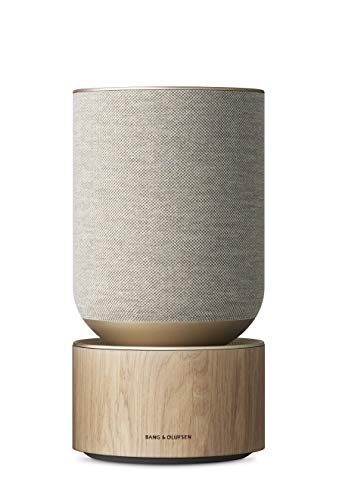
Beautifully balanced: Contemporary, elegant design. Pure, unspoiled sound performance. Two sides to one speaker working in harmony, Beosound Balance.

100W Stereo 8-Ohms, 190W Stereo 4-Ohms, 380W Mono 8-Ohms, 480W Mono 6-Ohms

HIGH-END SOUND QUALITY FOR SERIOUS ENTHUSIASTS – Audiophile level sound stage produced by the finest quality components. Features ribbon horn tweeters and 6.5in woofers that provide crisp, clear, natural sounding highs and powerful room-shaking bass that doesn't distort at higher volumes.
Analyzing Speaker Sensitivity
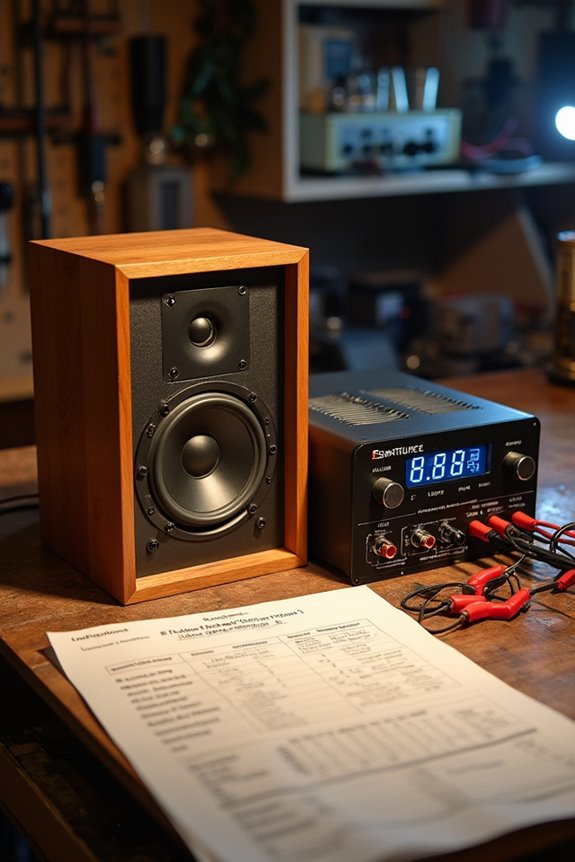
Selecting the right amplifier involves more than just matching wattage; we also need to contemplate speaker sensitivity. Sensitivity ratings reveal how efficiently a speaker converts amplifier power into sound. For example, a speaker rated at 90 dB will require considerably less power to achieve the same volume as one rated at 85 dB. In practical terms, this means that a 95 dB speaker can be effectively driven with just 20-50 watts, while lower sensitivity models may need a robust 100 watts or more. When we consider power efficiency, knowing your speaker’s sensitivity helps guarantee we choose an amp that matches our listening preferences—amplifying our enjoyment without the risk of underpowering or overpowering. This thoughtful approach enhances the overall sound experience. Additionally, matching the amplifier’s power output with the speaker’s specifications is crucial for achieving optimal sound performance.
Exploring Amplifier Classes and Sound Quality

As we plunge into amplifier classes, it’s important to recognize how each type can influence our listening experience. Class A amplifiers offer pure sound fidelity, making them perfect for audiophile setups, though their low efficiency can lead to heat issues. Class B amps are more efficient but can suffer from distortion, which is why Class AB is often the preferred choice for a balanced sound with reduced distortion. On the other hand, Class D amplifiers boast high efficiency, though they’ve faced scrutiny over sound quality. Finally, Class G and H amplify performance even further, improving power utilization. Choosing the right amplifier type depends on our priorities—whether we value purity, efficiency, or a balanced approach. When selecting an amplifier, consider its power rating to ensure optimal performance with your bookshelf speakers.
Recommended Products

Powerful Hybrid Amplifier – Features a dual Class A/AB architecture, combining warm, natural analog sound with dynamic digital efficiency for a truly audiophile experience.


VERSATILE CONNECTION METHODS: Seamlessly integrates into any home theater or stereo system with speaker outputs or a subwoofer output, ensuring flexible and easy setup. Now available in black, white, and Grey finish.
Ensuring Connectivity and Compatibility

When connecting our bookshelf speakers to an amplifier, guaranteeing compatibility is key for ideal audio performance. We want to check connection methods, like RCA jacks, 6.35mm jacks, or binding posts, to match the devices. For example, if our speakers use banana plugs, we should look for amplifiers that support them. Next, we should consider the impedance of our speakers, commonly between 6 to 8 ohms, and guarantee the amplifier can drive this range without overheating. Additionally, ensuring that our speakers have a minimum power rating of 30W RMS will help avoid distortion at comfortable listening levels. Finally, quality cable types matter too—using sturdy cables enhances signal transfer and minimizes wear. Choosing the right setup not only simplifies installation but also maximizes our listening experience, keeping our audio gear safe and sound for years to come!
Recommended Products

100W Stereo 8-Ohms, 190W Stereo 4-Ohms, 380W Mono 8-Ohms, 480W Mono 6-Ohms

7-Channel Class AB Amplifier: Delivers 7x210W (4 ohms) or 145W (8 ohms), all channels driven, for powerful, affordable home theater audio.

TRACTRIX HORN TECHNOLOGY - Klipsch exclusive 90x90 Tractrix horn technology ensures that the R-610F high frequency energy is aimed at the listener and reduces artificial reverb or filtering caused by indirect sound bouncing off of walls. Using this proprietary focused technology gives you the best clarity, dynamics, and detail
Considering Room Size and Acoustic Factors
Understanding the dimensions of our listening space is essential if we want to select the right amplifier and bookshelf speakers for our setup. For small rooms, like a bedroom, we’ll find that bookshelf speakers with 4-5 inch woofers work best, providing clear sound without overwhelming us. In contrast, larger spaces may need 6-8 inch woofers or even subwoofers for that rich bass.
Additionally, we should remember how room acoustics, like wall materials and furniture arrangement, affect sound clarity. By ensuring our bookshelf speakers are positioned away from walls, we can minimize bass boom. Considering acoustic treatment, such as adding soft furnishings, can further enhance sound quality, allowing us to truly enjoy our audio experience.
Assessing Amplifier Features and Inputs
Choosing the right amplifier for our bookshelf speakers involves considering several features and inputs that will guarantee peak performance. First, we should look for input versatility, including options like RCA, Bluetooth, or USB connections. This variety guarantees we can connect our favorite audio sources, from turntables to smartphones, without hassle. Additionally, tone controls like bass and treble adjustments can help us customize our listening experience to fit our room’s acoustics and our personal tastes. While not strictly necessary, these features can greatly enhance our enjoyment. Finally, let’s not overlook the importance of volume control precision, as a smooth operation directly impacts our overall listening pleasure. By selecting an amplifier that meets these criteria, we’ll set ourselves up for audio excellence.
Recommended Products
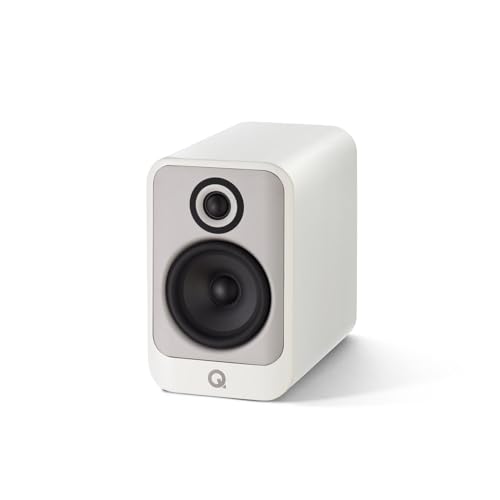
Hifi Bookshelf Speakers: Q Concept 30 passive speakers let you feel like you're listening to your favorite music live. The 0.9" high-frequency driver is hermetically sealed and mechanically isolated from the front baffle, protecting it from internal resonances from the 5" mid/bass driver for a truly refined sound.

HIGH-END SOUND QUALITY FOR SERIOUS ENTHUSIASTS – Audiophile level sound stage produced by the finest quality components. Features ribbon horn tweeters and 6.5in woofers that provide crisp, clear, natural sounding highs and powerful room-shaking bass that doesn't distort at higher volumes.

The PSB’s Alpha iQ is an all-in-one audio system for the streaming age. There’s no need to clutter your living space with speaker cables. The left and right speakers communicate via a wireless link that can cover most rooms in an average-size home without delays or latency, so music stays synched and clear regardless of speaker placement
Selecting the Right Speaker Placement
To achieve the best sound quality from our bookshelf speakers, we need to contemplate proper placement strategically. First, let’s guarantee the speaker height aligns with our ears, ideally between 24-36 inches. This height elevates clarity and enhances the overall experience. Next, we should use toe-in adjustments, angling speakers towards our primary listening position for improved stereo imaging.
Maintaining proper speaker distance is essential too; ideally, we want an equilateral triangle with our listening spot. Decoupling methods, like using isolation pads, prevent vibrations that distort sound. Finally, let’s consider room acoustics; soft furnishings help absorb reflections that could muddle sound. By strategically placing our speakers, we create an inviting and immersive listening experience for everyone.
Planning for Future Upgrades and Enhancements
When we think about enhancing our audio experience, planning for future upgrades is key to ensuring our system remains relevant and high-performing over time. By employing future proofing strategies, we can choose amplifiers that accommodate demanding speaker upgrades. Look for models with higher wattage and lower impedance ratings so we’ve got room to grow. Additionally, opting for integrated amplifiers with built-in streaming capabilities keeps our connections modern. Consider amplifiers that allow modular expansions, enabling us to upgrade certain features without replacing the entire unit. By thoughtfully considering these upgrade pathways, we’re setting ourselves up for a flexible audio future, ensuring our system continues to impress whether we’re expanding our collection or diving into new audio technologies.
Frequently Asked Questions
What Amplifier Brands Are Known for Quality With Bookshelf Speakers?
They say good things come in small packages, and with brands like NAD Electronics, Marantz Amplifiers, Cambridge Audio, Yamaha Receivers, Denon Amplifiers, and Onkyo Systems, we’re sure to find quality amplification for our beloved bookshelf speakers.
How Do I Budget for a Good Amplifier and Speakers?
When budgeting for good amplifier and speakers, we should prioritize sound quality, aiming for balanced spending. Let’s consider budgeting tips that enhance our experience, like investing a bit more in speakers for ideal performance together.
Can I Use a Home Theater Receiver for My Bookshelf Speakers?
Absolutely, we can use a home theater receiver for our bookshelf speakers! Their receiver compatibility typically supports our setup’s needs, ensuring we enjoy an immersive audio experience without sacrificing performance or sound quality.
What Are Common Misconceptions About Amplifier Wattage?
In the symphony of sound, we often misinterpret amplifier wattage. It’s not just about power; speaker impedance and amplifier efficiency dictate our experience. Let’s challenge these misconceptions together for a richer listening journey.
How Often Should I Upgrade My Amplifier for My Speakers?
When considering amplifier lifespan and upgrade frequency, we often find that every 5 to 10 years is ideal. Staying current with technology keeps our audio experience fresh and connected, reflecting our evolving listening preferences.