As an Amazon Associate, we earn from qualifying purchases. Some links on this site are affiliate links at no extra cost to you. Our recommendations are based on thorough research and editorial judgment.


How To Set Up A Complete DJ System For Parties?

To set up a complete DJ system for parties, we start with essential gear like a 2-channel mixer for beginners and solid audio cables. We connect turntables using RCA cables and add a powered subwoofer with XLR cables for rich sound. Choosing a compatible controller guarantees smooth changes. Then, we perform a sound check with calibrated microphones for clarity. Regular maintenance keeps our equipment in top shape. Let’s explore more ways to optimize our setup for an unforgettable experience.
Key Takeaways
- Choose the right mixer (2-channel for beginners, 4-channel for advanced) and connect turntables or a DJ controller appropriately.
- Use solid audio cables for connections and utilize RCA and XLR cables for optimal signal integrity and sound quality.
- Position speakers correctly for enhanced sound clarity and conduct a sound check to assess room acoustics.
- Ensure software compatibility with your controller, selecting features like jog wheels and performance pads for dynamic mixing.
- Regularly maintain equipment by cleaning cables and connections to prevent issues and ensure reliable performance during parties.
Equipment Essentials
You may be interested


Setting up a DJ system starts with understanding the essential gear that forms the backbone of any great performance. First, let’s choose our mixer types—2-channel for beginners or 4-channel for advanced setups. We’ll need solid audio cables to connect everything. Next, consider headphone quality; DJ-specific headphones provide the sound clarity we need for beatmatching.
For playback, we can decide between turntable setups or DJ controllers, which combine mixer and playback functions. Our sound system, including well-placed speakers and possibly a subwoofer for larger events, enhances the vibe considerably. Remember, proper speaker placement is key for clarity. By investing in reliable performance gear, we’re setting ourselves up for unforgettable moments on the dance floor. Additionally, incorporating a mixer with USB connectivity allows for seamless integration with computers, enhancing our mixing capabilities.
Recommended Products

VERSATILE DJ PERFORMANCES -Standalone 4-deck playback for versatile DJ performances. Mix and match different media sources to match your playing style.

32-channel digital mixing console with 33 motorized faders, instant recall, parametric EQ, 5-core ARM DSP processing, 4 onboard FX Engines, and integrated multitrack USB recorder

STUNNINGLY CLEAR SOUND QUALITY - The DJM-A9 has been upgraded with stunningly clear sound quality, giving you the edge when it comes to taking your performances to the next level.
Connecting the Gear
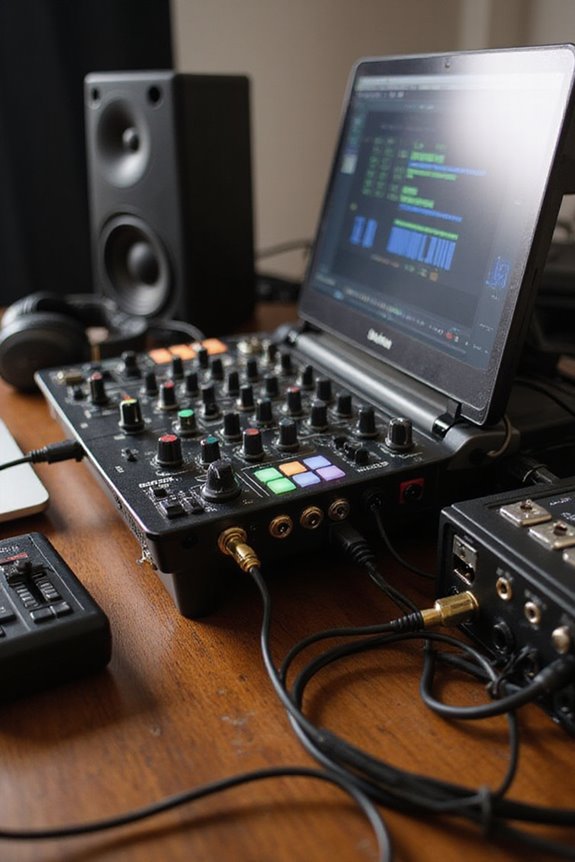
When connecting our DJ gear, it’s crucial to guarantee every piece is linked properly for a seamless performance. Start by linking our turntables to the mixer using RCA cables, ensuring a secure connection for robust audio transmission. Don’t forget the signal ground cable to prevent that pesky audio hum. If we’ve got a powered subwoofer, let’s connect it to the mixer using XLR cables, then chain the output to our speakers for balanced sound. Always pay attention to cable types—using XLR for main outputs helps maintain signal integrity. Keep an eye on volume levels; starting around noon can help us avoid distortion. Let’s take a moment to verify our setup is tidy, reducing risks during the party! Additionally, ensuring adequate power output from our amplifier is essential for optimal sound clarity throughout the event.
Recommended Products

A studio-quality, 96 kHz/64-bit digital signal processor uses enhanced dithering technology and a low-jitter clock to deliver a warm, natural analog sound

New large motorized jog wheels with haptic feedback in three modes: Feel a 'click' for cue points and loops when scrolling through tracks

This is UHF stereo wireless headphone bundle widely used for silent party,meeting,education,broadcasting, tourism and so on
Software and Controllers

To kick off our journey into the world of DJ software and controllers, it’s crucial to recognize how essential these tools are for crafting our sonic experience. The right software guarantees seamless software compatibility with our chosen controller. For example, Serato DJ Pro’s intuitive interface pairs perfectly with controllers like the Numark NS4FX.
When we consider controller features, we find options like jog wheels with BPM displays and performance pads for triggering live remixing. Controllers like the Pioneer DJ DDJ-FLX4 balance affordability and function, making them great for beginners and experienced DJs alike. Ultimately, understanding our software and controller compatibility helps us create dynamic sets, elevating the party experience we all seek to create. Additionally, many controllers support music streaming services which significantly enhances the range of tracks available during performances.
Recommended Products

Full-size jog wheels enable next-level scratching, and color On Jog Display gives you crucial track information

LARGE 10.1-INCH TOUCHSCREEN - High-resolution capacitive display allows viewing of up to 13 tracks at once. Features Playlist Bank for rapid access to four playlists and Touch Preview for listening to tracks without loading them

It’s Time To Update Your DJ Equipment With Denon DJ’s New Mainstage Media Player : Standalone DJ media player powered by ENGINE OS with New HD touchscreen for visualizing critical DJ workflow info
Sound Check and Calibration
Before we plunge into the intricacies of sound check and calibration, it’s essential to understand their pivotal role in delivering a flawless DJ performance. First, we set up a calibrated microphone about one meter from our speakers to assess sound pressure levels accurately. Next, we stabilize the frequency response by adjusting the output channels based on the readings from our software. Don’t forget to level the faders and move the crossfader slowly to avoid any dead space. We’ll consistently run calibration sequences to guarantee our hardware communicates perfectly. Regularly revisiting our setup, especially our room acoustics, helps us maintain a balanced and clear sound, assuring our parties are unforgettable experiences for everyone involved. Additionally, utilizing built-in learning aids can enhance our sound calibration process, ensuring we achieve optimal audio performance.
Additional Accessories and Setup Considerations

Setting up a DJ system effectively involves considering various additional accessories and setup elements that can enhance our performance. First, we should get high-quality audio interfaces for seamless device connectivity, ensuring stunning sound quality. For our monitoring needs, performance monitors can greatly improve our cueing during mixes.
Don’t forget about essential accessories: a sturdy laptop stand will keep our gear organized, while DJ headphones with noise isolation allow us to focus. We can also benefit from reliable storage solutions like external hard drives for quick music access. Finally, power strips with surge protection will safeguard our equipment, making sure we’re ready for every gig. By paying attention to these details, we can create a more professional and efficient setup. Additionally, investing in a mixer with Bluetooth connectivity can streamline our audio sources and reduce cable clutter.
Recommended Products

Spacious & Sturdy Workstation – Designed for professionals, this DJ table offers 54” W x 27” D of workspace with a 35” standing height, providing ample room for mixers, controllers, laptops, and instruments. Built with a lightweight aluminum base and a steel tabletop, it supports up to 400 lbs without compromising stability.

We listened to feedback from 90% of buyers in the market. As an event DJ, you often have to set up in areas with limited space. Whether it's a tight corner in a bar or a small office party, the footprint of your setup becomes crucial. This DJ table stand portable booth, measuring 40x20x45 inches, is perfect for those situations. The compact DJ stand booth design ensures you have everything you need in a limited space
【DOUBLE-TIER WORKSPACE UPGRADE】 Elevate your performance with our professional two-tier design. The full-width upper shelf provides the perfect eye-level platform for your laptop or controller, while the spacious main desk keeps your mixer and decks organized. Say goodbye to cluttered setups and hello to a professional dual-layer workflow.
Maintenance and Troubleshooting
Maintaining our DJ system is just as important as setting it up for a successful performance. To guarantee our gear lasts, we should create a maintenance schedule that includes regular cleaning, inspections, and testing. For instance, we can use microfiber cloths and anti-static brushes to keep our turntables and mixers dust-free. Before each event, let’s check cables and connections for wear, and test faders for smooth operation.
If issues arise, we can use troubleshooting techniques like cleaning slider potentiometers to fix crackling audio. Let’s also remember to cool and warm up our equipment properly to avoid thermal stress. By prioritizing maintenance, we keep our system reliable, guaranteeing we deliver the best experience for our audience.
Tips for a Successful DJ Performance
When it comes to delivering a successful DJ performance, understanding audience engagement strategies can make all the difference. First, we need to analyze the event type to choose genres and tempos that resonate. Starting with low-tempo tracks allows us to build performance energy gradually.
As we observe the crowd, we can adjust our playlist based on their body language. If a particular style grabs their attention, we can repeat it to enhance crowd engagement. Let’s not forget to connect with the audience visually; using confident body language adds to the atmosphere.
With a well-organized music library and a knack for quick problem-solving, we’re set for an unforgettable night that keeps everyone moving.
Preparing for Various Party Venues
As we consider the unique characteristics of each event location, it’s essential to adapt our DJ setup accordingly. A thorough venue assessment guarantees we identify power outlet locations and assess the space’s acoustics for peak sound.
In our space planning, we’ll select appropriate equipment, taking into account both small gatherings and larger festivals that require additional sound support. Elevating speakers on stands enhances sound clarity, while organizing cables neatly and using a DJ facade keeps our setup professional.
Preparing backup plans for equipment failures, coordinating with venue staff, and adhering to noise regulations assure a smooth performance. With careful preparation, we create a memorable experience for our audience no matter the venue.
Recommended Products

ULTRA-LIGHTWEIGHT YET INCREDIBLY STABLE—Each 4'x4' deck weighs just 42 lbs yet holds 3,400 lbs and features a patented 5-leg design with center support that eliminates bounce and sway. High-grade aluminum construction provides professional-grade stability without the heavy lifting.

ULTRA-LIGHTWEIGHT YET INCREDIBLY STABLE—Each 4'x4' deck weighs just 42 lbs yet holds 3,400 lbs and features a patented 5-leg design with center support that eliminates bounce and sway. High-grade aluminum construction provides professional-grade stability without the heavy lifting.

【Pro-Grade Folding Stage 4x4 ft】: This heavy duty folding stage supports 1102 lbs (500 kg) per square meter. The anti-slip wood panel surface and aluminum frame make it a reliable portable stage platform for touring bands, DJs, and event rental companies.
Frequently Asked Questions
What Should I Wear While DJING at a Party?
When we’re spinning tracks and creating unforgettable moments, our outfit essentials matter. Let’s choose attire that enhances our stage presence, reflecting our personality while ensuring comfort and style at every party.
How Can I Choose the Right Music for Different Events?
To choose the right music for different events, we need to focus on genre selection and audience preferences. Understanding their tastes helps us create a connection, making everyone feel included and part of the experience.
What Should I Do if the Crowd Isn’t Dancing?
If the crowd isn’t dancing, let’s focus on crowd engagement and music selection. We can create excitement by adjusting the tempo and vibes, encouraging our friends to join in and feel the rhythm together.
How Do I Maintain Energy During Long Sets?
We’ve all felt that intimidating challenge of sustaining energy during long sets. By mastering energy management and fostering crowd engagement, we can create an unforgettable experience that keeps everyone moving and connected throughout the night.
Can I DJ Solo Without Any Prior Experience?
Absolutely, we can DJ solo without prior experience! With the right DJ equipment and some practice techniques, we’ll build confidence and skills together, making our journey into DJing enjoyable and supportive. Let’s plunge into!