As an Amazon Associate, we earn from qualifying purchases. Some links on this site are affiliate links at no extra cost to you. Our recommendations are based on thorough research and editorial judgment.


5 Best Guitar Lesson Books to Help You Strum Like a Pro

To strum like a pro, check out the *Hal Leonard Guitar Method – Complete Edition*, which offers a solid beginner foundation. *Guitar Exercises for Beginners* boosts skills quickly with daily workouts, while *Guitar Lessons for Beginners with Video and Audio* incorporates multimedia for effective learning. You’ll memorize the fretboard in no time with the *Guitar Fretboard Memorization Guide*, and *Essential Elements for Guitar* enhances music theory understanding. Keep exploring to find the perfect fit for your guitar journey.
Key Takeaways
- Hal Leonard Guitar Method – Complete Edition provides a solid foundation with step-by-step instructions for beginners on chords, techniques, and finger placement.
- Guitar Exercises for Beginners offers 100 manageable exercises that enhance finger dexterity, beneficial for quick skill improvement in just 10 minutes a day.
- Guitar Lessons for Beginners with Video and Audio incorporates multimedia elements and popular songs, making learning engaging and enjoyable while ensuring clear progression.
- Guitar Fretboard Memorization Guide helps users quickly memorize the fretboard through practical exercises, emphasizing open string notes and the first twelve frets.
- Essential Elements for Guitar – Book 1 combines chords, music theory, and sight-reading, with a progressive approach that supports gradual skill enhancement through short practice songs.
Hal Leonard Guitar Method – Complete Edition

You may be interested


The Hal Leonard Guitar Method – Complete Edition is an excellent choice for beginners enthusiastic to learn guitar, as it offers a step-by-step approach that’s both structured and supportive. This spiral-bound book covers essential topics, starting with string notes before introducing chords and techniques like palm muting and basic fingerstyle. You’ll appreciate the clear photos for finger placement, which make learning easier. Additionally, you can purchase optional audio lessons to reinforce your skills. Overall, this highly recommended method has received positive feedback for its effectiveness, making it a timeless resource to help you strum confidently and build a solid foundation.
Best For: Beginners eager to learn guitar, as well as those wanting to refresh their skills with a structured and supportive method.
Pros:
- Step-by-step instructional approach makes learning accessible for beginners.
- Clear photos for finger placement aid in effective practice.
- Optional audio lessons enhance understanding by demonstrating pieces in context.
Cons:
- Some copies reported to have quality issues, such as water damage or unreadable print.
- The book’s pacing may feel slow for more experienced players.
- Optional audio lessons incur an additional cost, which may not appeal to every learner.
Guitar Exercises for Beginners: 10x Your Guitar Skills in 10 Minutes a Day


Guitar Exercises for Beginners is perfect for anyone enthusiastic to plunge into music without prior experience. This book offers 100 exercises that you can tackle in just 10 minutes a day, making it manageable for busy schedules. With downloadable audio tabs available on the Guitar Head website, you can enhance your learning experience. The exercises hone both hands’ skills using clear musical notation and tablature. Although some chord charts might not always line up with lessons, consistent practice is essential. Many users report significant improvements in finger dexterity and overall playing, proving this book is an excellent foundation for new guitarists.
Best For: Individuals with little to no musical background who are eager to learn guitar at their own pace.
Pros:
- Offers 100 structured exercises that can be completed in just 10 minutes a day, making it suitable for busy beginners.
- Provides downloadable audio tabs for enhanced learning and skill development.
- Many users report significant improvements in finger dexterity and overall playing skills, making it an effective tool for new guitarists.
Cons:
- Some chord charts may not consistently align with the lessons, leading to possible confusion.
- While the book suggests 10 minutes of practice, many reviewers recommend a longer commitment for better results.
- Lacks advanced exercises, limiting progression for those looking to advance quickly.
Guitar Lessons for Beginners with Video and Audio

For anyone looking to immerse themselves in guitar playing, the Guitar Lessons for Beginners with Video and Audio stands out as a top choice, especially due to its engaging multimedia approach. This resource combines clear instructions with 50 popular songs, ensuring an enjoyable learning experience for all ages. You’ll find sturdy pages with great illustrations that enhance understanding, while QR codes provide sound samples for each note, making practice more interactive. Users rave about the instructional clarity and progression. Though a physical CD would be helpful, the videos and audio guides are excellent tools for enhancing your guitar journey.
Best For: This product is best for beginners of all ages—children, teens, and adults—who want to learn guitar through an engaging multimedia experience.
Pros:
- Clear instructions and effective learning progression keep users engaged and motivated.
- Includes 50 popular songs and interactive QR codes for sound samples, enhancing the learning experience.
- Suitable for both complete beginners and those returning to the instrument, catering to diverse learning styles.
Cons:
- Lacks a physical CD for audio instructions, which some users find beneficial for learning.
- Users may need to rely on YouTube as a supplemental resource for additional audio content.
- Some may prefer more traditional teaching methods without the reliance on multimedia.
Guitar Fretboard Memorization Guide
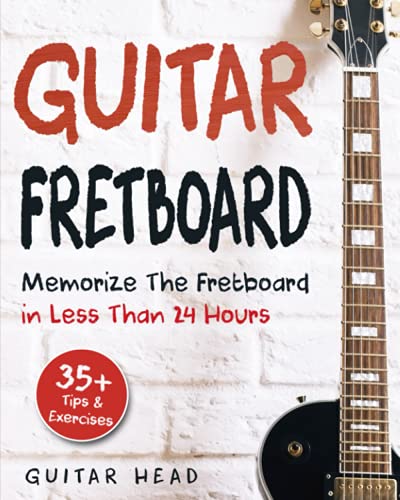
Accessing the fretboard of a guitar can seem intimidating for beginners, but the “Guitar Fretboard: Memorize The Fretboard In Less Than 24 Hours” book makes it an achievable goal. Designed specifically for novices, it simplifies learning through logical progressions and practical exercises. Users often memorize the entire fretboard in under an hour, with some even achieving this in just nine minutes! It emphasizes open string notes and the interconnectedness of notes within the first twelve frets. Despite some visual presentation critiques, the effective content and direct instructions make it a recommended tool for anyone serious about mastering the guitar.
Best For: This book is best for beginners who are starting from zero and wish to quickly learn and memorize the fretboard of the guitar.
Pros:
- Provides logical progressions and patterns that enable rapid memorization.
- Many users report memorizing the entire fretboard in significantly less than 24 hours, with some achieving it in as little as nine minutes.
- Includes practical exercises and recommended tools, such as a chromatic tuner, for effective practice and reinforcement.
Cons:
- Visual presentation could be improved, with suggestions for clearer graphics and larger fonts.
- Some readers find the layout engaging but may require a more colorful and structured format for easier comprehension.
- Experienced musicians may not benefit as much as beginners from the content offered.
Essential Elements for Guitar – Book 1: Comprehensive Guitar Method for Beginners
Sale

Essential Elements for Guitar Book 1 | Beginner Guitar Method with Chords, TAB, and Music Theory...
- Features 64 Songs In This Comprehensive Method For Bands And Strings
- Features Cross-Curricular Activities, Songs And More
- Includes Theory, Chords, Notes And More
Essential Elements for Guitar – Book 1 stands out as an exceptional choice for beginners keen to learn the instrument. This thorough method focuses on chords, music theory, and sight-reading, smoothly guiding you from simple C and G chords to more complex songs. You’ll enjoy practicing basic strum patterns in both 4/4 and 3/4 time, allowing you to play real tunes right from your first lesson. The book uses short songs to ease your finger placement and notation reading. Significantly, it avoids clutter, fitting conveniently on music stands, making it a user-friendly resource highly recommended by music teachers for all ages.
Best For: Beginners of all ages looking to learn guitar with a structured and engaging method.
Pros:
- Clear progression from simple to complex songs, enhancing learning experience.
- Convenient size for music stands, making it user-friendly in various settings.
- Engaging approach with short songs that promote finger placement and notation reading.
Cons:
- Lacks a CD for audio reference, which may be preferred by some learners.
- May not be suitable for those with prior guitar experience, who might need more advanced material.
- Limited in-depth music theory, which could be a downside for students wanting a comprehensive understanding.
Factors to Consider When Choosing Guitar Lesson Books

When choosing guitar lesson books, you need to take into account several key factors that align with your goals and preferences. Think about your target skill level, whether the teaching style matches how you learn best, and the quality of the instructional methods. Additionally, look for supplemental resources and the overall structure of the lessons to guarantee you can progress effectively.
Target Skill Level
How can you guarantee you’re picking the right guitar lesson book for your needs? Start by evaluating your current skill level. If you’re a beginner, look for books that focus on basic techniques, chords, and simple song structures. These beginner books introduce concepts progressively, making learning manageable. If you’re more advanced, seek out materials that explore complex music theory and intricate styles. Remember, some books are perfect for absolute novices, offering simplified exercises and supportive resources. Choose a book that matches your skill level, as the right fit affects your motivation and learning effectiveness. Overly challenging content can lead to frustration, while overly simplistic material can cause boredom. Aim for balance to enhance your learning journey!
Learning Style Compatibility
Selecting a guitar lesson book that suits your learning style can greatly enhance your practice and enjoyment. If you’re a visual learner, look for books with illustrations and video components that help clarify concepts. For auditory learners, books with downloadable audio lessons can provide essential sound samples to support your practice. Assess whether you prefer reading music notation or tablature, as this choice impacts understanding. If you thrive on structured progressions, seek material that introduces new concepts gradually, building your confidence. Finally, if you learn best through hands-on experience, choose books focused on practical exercises that enhance hand coordination and muscle memory. Finding the right book can transform your learning journey, making it enjoyable and effective!
Instructional Methods and Quality
Understanding the instructional methods and quality of guitar lesson books is essential for your success as a player. Look for books that include clear photos or illustrations for finger placement, helping you grasp proper techniques. A well-structured learning progression is key; it should gradually introduce new material to prevent you from feeling overwhelmed. Effective books often use a mix of teaching methods, like standard musical notation and tablature, to address different learning styles. You’ll also benefit from user feedback regarding the clarity and organization of content, as this can indicate how well the book facilitates skill development. Remember, quality instructional methods help you build a solid foundation, advancing your guitar-playing abilities.
Supplemental Resources Available
When choosing a guitar lesson book, it’s essential to take into account the supplemental resources that come with it, as these can greatly enhance your learning experience. Many books provide downloadable audio lessons or tabs, offering auditory examples that showcase how pieces should be played. You should also consider resources like YouTube tutorials and instructional DVDs, which reinforce what you learn and present varied teaching methods. Look for books with QR codes for easy access to sound samples on your device. Additionally, practicing with tools like chromatic tuners aids in note identification and improves your intonation. Remember, effective supplemental resources can profoundly impact your skill development, so choose wisely!
Structure and Progression
Choosing a guitar lesson book involves looking closely at its structure and progression. You’ll want a book that starts with simple concepts, like individual notes and basic chords, gradually moving to complex techniques and songs that won’t overwhelm you. A well-organized progression helps you build confidence, allowing you to grasp new material without getting lost. Clear instructional quality, including visuals for finger placement, supports comprehension and retention. It’s essential that practice tunes accompany each new concept, reinforcing what you’ve just learned in real-time. Engaging content, like popular songs and varied exercises, can also boost your motivation. This blend of structure and engaging content creates a fun and effective learning experience that keeps you progressing steadily.
Visual Presentation and Clarity
Visual presentation plays an essential role in how effectively you learn the guitar, as clear visuals help simplify complex concepts and guarantee you grasp fundamental techniques. For beginners, books featuring clear photos for finger placement and diagrams are crucial for mastering fretboard positioning. Larger fonts and well-structured layouts improve readability, reducing frustration and enhancing comprehension. Engaging graphics and vibrant colors not only make learning attractive but also aid in quicker retention of information. Consistent visual alignment, like matching chord charts with lessons, avoids confusion and supports smoother progress. Additionally, visual aids such as QR codes or downloadable content can offer auditory support, further reinforcing the concepts that you’re reading about. A well-presented book truly elevates your learning experience.
Frequently Asked Questions
What Skill Level Is Required for These Guitar Lesson Books?
When you’re looking at guitar lesson books, skill levels vary from beginner to advanced. If you’re a beginner, you’ll find books designed for you, focusing on basic chords, strumming patterns, and simple songs. As you progress, you’ll encounter materials for intermediate players that explore techniques like fingerpicking and scale practice. Advanced books often cover complex music theory, improvisation, and intricate pieces. Choose a book that matches your current skill level to guarantee effective learning.
Can These Books Be Used for Self-Taught Learning?
Absolutely, you can use these books for self-taught learning! They’re designed to guide you through various techniques, from basic strumming patterns to advanced chord progressions. With clear instructions and exercises, they make it easy to practice independently. Have you ever wondered if you can really learn an instrument on your own? Many people do! These books provide the structure and support you need to build your skills at your own pace.
Are There Online Resources to Complement These Books?
Absolutely, there are plenty of online resources to complement your learning experience! Websites like YouTube offer countless tutorials and lessons tailored for various skill levels. Additionally, platforms such as Ultimate Guitar provide tabs and play-along tracks that make practicing enjoyable. Online forums, like Reddit’s guitar community, let you connect with other learners for advice. Combining these resources with your books will enhance your skills and keep your practice dynamic and engaging.
How Long Does It Take to See Progress Using These Books?
“Practice makes perfect,” and that’s true when you’re using those books. Typically, you’ll notice progress within a few weeks if you commit regularly, say 15-30 minutes daily. Mastering new techniques or songs takes time, so don’t rush the process. Expect noticeable improvements in rhythm and finger agility after about a month. Ultimately, your dedication and practice consistency will determine how quickly you advance, as every player’s journey is unique. Keep strumming!
Do These Books Cover Music Theory as Well?
Yes, many guitar lesson books do cover music theory. You’ll often find sections on chords, scales, and notes, which help you understand how music works. These concepts make it easier for you to learn songs and improvise. While some books focus mainly on playing techniques, others offer a more balanced approach, integrating theory and practice. This combination not only boosts your skills but also deepens your appreciation for music as a whole.