As an Amazon Associate, we earn from qualifying purchases. Some links on this site are affiliate links at no extra cost to you. Our recommendations are based on thorough research and editorial judgment.


The 5 Best Guitar Chord Dictionaries for Every Aspiring Musician

If you’re aiming to enhance your guitar skills, check out these five excellent chord dictionaries: The Chord Factory helps you understand chord theory; Berklee Rock Guitar Chord Dictionary is perfect for rock fundamentals; The Melodic Jazz Guitar Chord Dictionary organizes chords by melody notes for jazz enthusiasts; Guitar Chord Chart Poster for Beginners provides essential chords in a user-friendly format; and Guitar Chords offers a simple, one-chord approach. Each resource serves distinct needs, making it easier for you to choose one that fits your style. Keep exploring to find the best options for your guitar journey!
Key Takeaways
- The Chord Factory offers advanced players a DIY approach to chord construction with a focus on theory and voice leading.
- Berklee Rock Guitar Chord Dictionary is ideal for beginners and intermediates, covering essential rock chords and common voicings.
- The Melodic Jazz Guitar Chord Dictionary organizes chord voicings by melody notes, catering to intermediate guitarists interested in chord melodies.
- Guitar Chord Chart Poster for Beginners provides clear diagrams of essential chords, perfect for novice players, but lacks advanced content.
- Guitar Chords: Easy-to-Use features a user-friendly format with one chord per page, though it has minor errors and lacks capo guidance.
The Chord Factory: Build Your Own Guitar Chord Dictionary

You may be interested


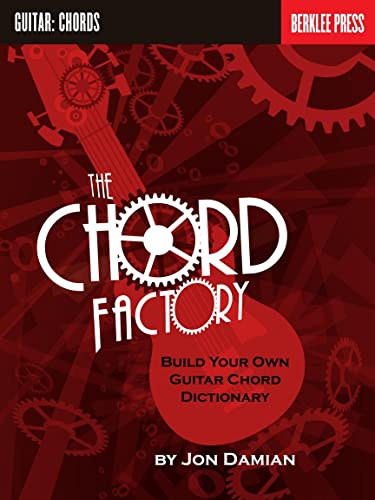
If you’re a dedicated guitarist looking to deepen your understanding of chord theory, “The Chord Factory: Build Your Own Guitar Chord Dictionary” is likely your best choice. This innovative resource transcends traditional chord dictionaries by encouraging you to explore the interrelations of notes instead of just memorizing fingerings. You’ll construct your own chord dictionary through a hands-on approach, starting with basic fretboard diagrams. Aimed at advanced players, it introduces vital concepts like guide tones and voice leading. With engaging explanations from Jon Damian, this book is a valuable tool for anyone serious about mastering chord theory and enhancing their musical creativity.
Best For: Dedicated guitarists looking to deepen their understanding of chord theory and enhance their musical creativity.
Pros:
- Encourages a hands-on, DIY approach to learning chord construction and theory.
- Provides a progressive method that builds a personalized chord dictionary tailored to the player’s needs.
- Engaging teaching style from Jon Damian, combining humor with educational content to maintain interest.
Cons:
- Primarily aimed at advanced players, which may be overwhelming for complete beginners.
- Requires time and effort to fully engage with the material, which may deter some learners.
- The author’s use of humor and cartoon character Chester may be distracting for some readers.
Berklee Rock Guitar Chord Dictionary
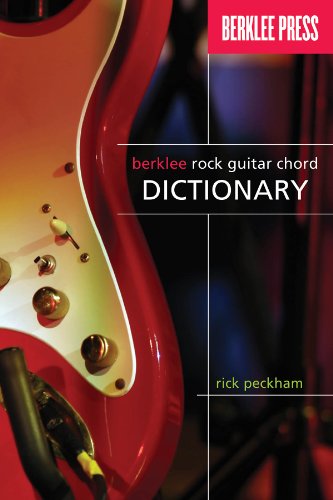
The Berklee Rock Guitar Chord Dictionary is an essential resource for beginner and intermediate guitarists enthusiastic to master the fundamentals of rock music. This compact guide spans 120 pages, covering open chord positions, power chords, barre chords, and triads. It focuses on common voicings, helping you understand chord construction rather than overwhelming you with exhaustive references. You’ll find alternative voicings that enhance your knowledge of the guitar neck. While it doesn’t include jazz chords, its spiral binding makes it user-friendly. Whether you’re starting out or need a quick reference, this dictionary serves as a valuable tool for your musical journey.
Best For: The Berklee Rock Guitar Chord Dictionary is best for beginner and intermediate guitarists looking to master fundamental rock chords and enhance their understanding of chord construction.
Pros:
- Concise and focused content that covers essential rock chords without overwhelming details.
- User-friendly spiral binding that allows for easy handling and reference during practice.
- Explores alternative voicings, enhancing knowledge of the guitar neck for improved playing versatility.
Cons:
- Limited to rock chords, lacking coverage of jazz chords and other musical styles.
- Not an exhaustive chord library, which may leave advanced players wanting more options.
- Only 120 pages, which might not satisfy those looking for a more comprehensive guide.
The Melodic Jazz Guitar Chord Dictionary
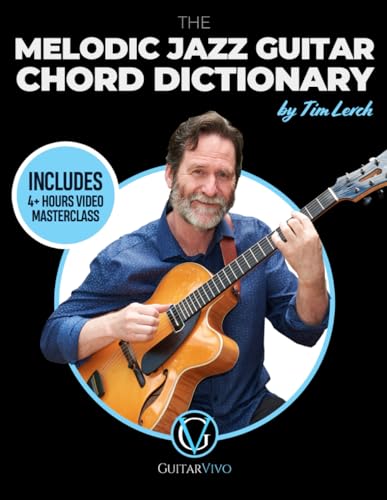
For intermediate guitarists looking to deepen their understanding of chord melodies, “The Melodic Jazz Guitar Chord Dictionary” stands out as an essential resource. This innovative book organizes chord voicings by melody notes and chord qualities, making it easier for you to create beautiful chord melodies. Authored by Tim Lerch, a student of Ted Greene, it’s packed with valuable insights for any guitarist. While it includes a thorough list of chords, some users suggest it would benefit from highlighting commonly used chords separately. Overall, this book is a must-have for modern jazz guitarists keen to enhance their skills and creativity.
Best For: Intermediate guitarists looking to deepen their understanding of chord melodies and enhance their jazz guitar skills.
Pros:
- Innovative organization of chord voicings by melody notes simplifies the creation of chord melodies.
- Authored by Tim Lerch, a respected teacher in the jazz guitar community, providing valuable insights.
- Helps players achieve significant improvements in their chord melody playing and understanding of harmony.
Cons:
- Some users suggest the book could benefit from highlighting commonly used chords separately for better usability.
- The comprehensive list of chords may overwhelm less experienced players with impractical options.
- While it’s a great resource, it is particularly suited for those with a solid understanding of theory, which may limit accessibility for absolute beginners.
Guitar Chord Chart Poster for Beginners (A4 Laminated)

Teaktok Guitar Chord Chart Poster For Beginner And Portable A4 Laminated Chords (Guitar)
- DUAL PACK VALUE: Includes both a comprehensive guitar chord chart poster and a portable a4 laminated chords for complete music theory learning
- BEGINNER FRIENDLY: Clear, easy-to-read diagrams showing essential guitar chords perfect for novice guitarists
- DURABLE DESIGN: Laminated finish protects the posters from wear and tear while ensuring long-lasting use
Designed specifically for novice guitarists, the Guitar Chord Chart Poster for Beginners (A4 Laminated) stands out as an essential tool for anyone enthusiastic to learn the instrument. This dual pack features a thorough chord chart poster paired with a portable A4 laminated version, perfect for on-the-go practice. The clear, easy-to-read diagrams showcase essential chords, making it ideal for beginners. With its durable laminated finish, this poster withstands wear and tear, ensuring long-lasting use. The A4 size is convenient for outdoor jamming, tabletops, or wall mounting, allowing you to easily view chords during practice sessions and enhancing your musical journey.
Best For: Beginner guitarists looking for a comprehensive and portable chord chart to aid their learning process.
Pros:
- Clear and easy-to-read diagrams that simplify learning essential guitar chords.
- Durable laminated finish protects against wear and tear, ensuring longevity.
- Compact A4 size makes it ideal for outdoor use, tabletops, and convenient wall mounting.
Cons:
- Limited to basic chords, which may not meet the needs of more advanced players.
- A4 size may be too small for some users who prefer larger visuals.
- The dual pack may not offer enough variety for those seeking more in-depth music theory resources.
Guitar Chords: Easy-to-Use, Easy-to-Carry, One Chord on Every Page

Guitar Chord Dictionaries stand out as an invaluable resource for musicians of all skill levels, especially beginners looking to build a solid foundation. The “Guitar Chords” book is user-friendly, featuring one chord per page, making it easy to reference while practicing. Its spiral binding and large diagrams enhance usability, allowing you to quickly flip through chords. Though some users report minor errors in chord names and finger placements, the overall content quality remains high. This book is perfect for both personal practice and teaching, offering an affordable way to explore a variety of chords and deepen your musical knowledge.
Best For: Beginner and experienced guitar players looking for an easy-to-use reference tool for learning and teaching chords.
Pros:
- Clear diagrams and one chord per page make it user-friendly and easy to reference during practice.
- Spiral binding allows for quick flipping through chords, enhancing usability.
- Affordable and effective resource for teaching children and personal practice.
Cons:
- Some users report errors in chord names and finger placements, which could lead to confusion.
- Lacks guidance on using a capo and does not indicate when strings should be played open or muted.
- Minor mistakes in diagrams may require users to pay attention to patterns and mark errors for better understanding.
Factors to Consider When Choosing a Guitar Chord Dictionary
When you’re choosing a guitar chord dictionary, think about your skill level and what chords you want to learn. Consider how the book presents information—some may focus on beginner-friendly approaches, while others might cater to advanced players. The author’s expertise also matters, as a knowledgeable guide can make all the difference in your learning journey.
Target Skill Level
Choosing the right guitar chord dictionary can greatly impact your learning experience, especially as you progress through different skill levels. If you’re a committed beginner, look for resources that emphasize fundamental chords and basic theory. These dictionaries will help build your foundation. On the other hand, if you’re more advanced, seek out dictionaries that explore complex chord constructions and voice leading, as they encourage a deeper understanding of chord relationships. Assess your prior knowledge of chord spelling and music theory; choose a resource that challenges you without overwhelming you. It’s essential that the content progression matches your learning needs, ensuring you’re not stuck with basic information or, conversely, lost in advanced concepts.
Chord Variety Offered
A solid guitar chord dictionary should offer a rich variety of chords that cater to different musical styles and preferences. When choosing one, consider whether it includes open chords, barre chords, power chords, and jazz chords. This variety guarantees it meets your stylistic needs. Look for dictionaries that provide not just basic voicings but also alternative voicings and complex structures, enhancing your understanding of chord construction. Check if it covers diverse chord types, like triads and extended chords, suitable for both beginners and advanced players. Additionally, a good resource should present chords in various positions on the neck, allowing exploration of multiple fingerings. Practical applications, such as common progressions and real-world examples, will help you integrate these chords into your playing effectively.
Learning Approach
Selecting the right guitar chord dictionary can greatly impact your learning experience, especially if it aligns with your personal approach to mastering the instrument. Consider whether the resource encourages a hands-on, DIY method, allowing you to build your own chord knowledge rather than just memorizing fingerings. Look for dictionaries that introduce fundamental concepts like chord construction, guide tones, and voice leading, which deepen your understanding. Evaluate if the book presents complex concepts progressively, catering to players with some prior music theory knowledge. Check if the learning methodology emphasizes practical applications, helping you explore alternative voicings and expand your skills on the guitar neck. Finally, verify the structure matches your learning style, whether through melody notes or clear diagrams for easy reference.
Usability and Format
When considering usability and format in a guitar chord dictionary, several key factors can enhance your learning experience. Look for clear diagrams and easy-to-read fonts that make it accessible, whether you’re a beginner or an advanced player. A well-organized layout is vital; it helps you find chords quickly. Spiral binding is a great choice, allowing pages to lay flat for easy reference, while laminated posters offer durability for everyday use. Choose a concise format that highlights essential chords, preventing information overload. Portability matters too—smaller chord charts are perfect for practice on the go. Finally, one chord per page can improve focus, letting you master each chord without distractions. These features guarantee your chord dictionary is both functional and user-friendly.
Author’s Expertise
Considering the author’s expertise is essential in choosing a guitar chord dictionary that truly meets your needs. An author with a solid background in music education and performance often enhances the quality of the content, providing depth that benefits your learning. If they’ve taught students at various skill levels, you’ll likely find clearer explanations and practical applications that cater to both beginners and advanced players. The author’s reputation within the music community also signals the reliability of their teaching methods. Additionally, authors trained by respected figures often integrate effective pedagogical techniques. When they engage readers with humor or relatable examples, they make complex concepts more accessible, enriching your overall learning experience while keeping you motivated.
Frequently Asked Questions
Can I Find Chord Dictionaries for Other Instruments?
Yes, you can definitely find chord dictionaries for other instruments! Many resources cater to various instruments like piano, ukulele, or banjo. You’ll discover online platforms, apps, and books that offer chord charts and finger placements. Some even include additional features like audio examples and play-along tracks. Just search for your specific instrument and “chord dictionary,” and you’ll uncover a wealth of materials designed to help you learn and master your chosen instrument.
How Do I Choose the Right Size for a Chord Dictionary?
You can’t fit a square peg in a round hole, and choosing the right size for a chord dictionary is essential. Consider how you’ll use it; if you’re traveling, a compact version is ideal. For home practice, a larger book offers more details. Check the font size and layout, too—readability matters. Ultimately, pick a size that matches your needs, ensuring you can easily reference chords while you play and learn.
Are There Online Chord Dictionary Resources Available?
Yes, there are plenty of online chord dictionary resources available. Websites like Ultimate Guitar and Chordify offer extensive libraries of chords for countless songs, making it easy for you to find what you need. You can also explore apps that provide interactive chord charts, allowing you to play along with your favorite tunes. These resources often include diagrams and playback features, so you’ll grasp the finger placements quickly and effectively. Immerse yourself and start exploring!
What Is the Difference Between Acoustic and Electric Guitar Chords?
Acoustic and electric guitar chords differ mainly in sound and construction. Acoustic guitars produce sound through hollow bodies, giving chords a warm, resonant tone. Electric guitars use pickups and amplifiers, resulting in a sharper, more versatile sound. While the finger placements for chords are the same, the way they resonate changes dramatically. You’ll find that playing on an acoustic feels different than on an electric, affecting your overall musical expression and style.
Can I Use Guitar Chord Dictionaries for Songwriting?
Absolutely, you can use guitar chord dictionaries for songwriting! Picture yourself strumming a melody under a starlit sky, discovering new chords that spark your creativity. These dictionaries provide a treasure trove of chord variations, helping you experiment with different sounds. They guide you in building progressions and exploring harmonies, making the songwriting process smoother. With each chord you learn, you’ll reveal the potential to create unique, enchanting songs that resonate with your audience.